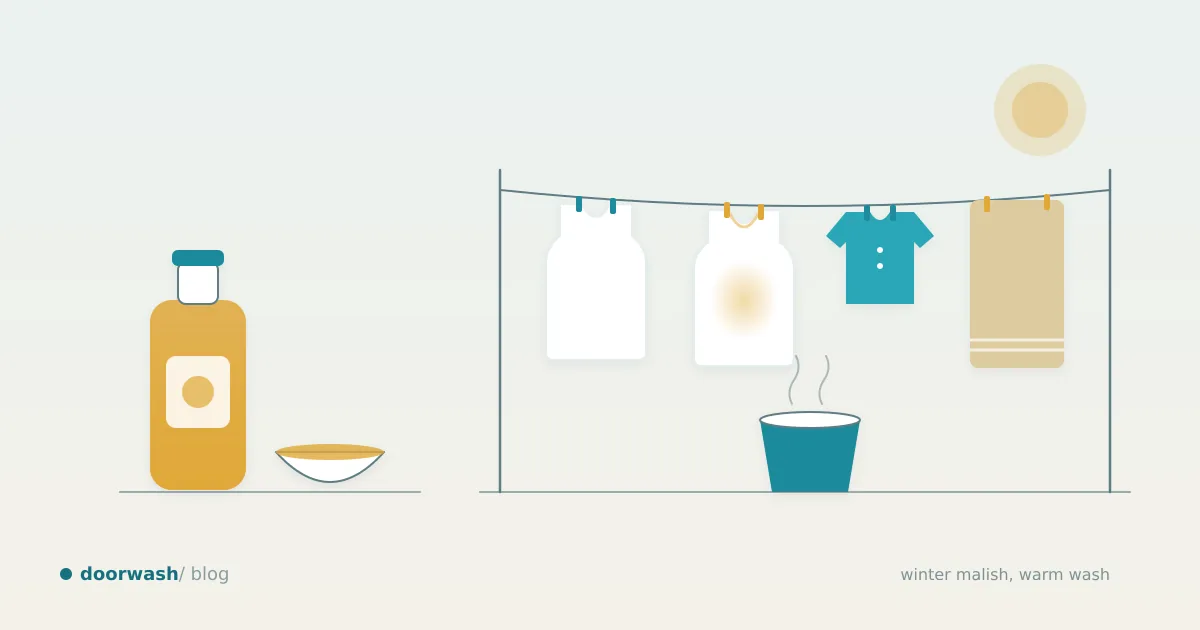
Every winter in Patna, the bottle comes out.
Kachchi ghani sarson tel, warmed in a katori, rubbed into a baby's legs on the terrace at eleven in the morning. Or into your own knees. Or your father's back, because that is what the cold is for. Then the baby gets dressed. You pull on a vest. Your father lies down for his afternoon nap on the good bedsheet.
By February, that vest smells like a kadhai nobody cleaned. The sheet has a pale yellow shape on it, roughly the outline of a person. The baby's jhabla has gone stiff at the neck.
You washed all of them. Many times. The oil is still there.
Mustard oil does not stay oil
Fresh mustard oil is thin and sharp. Leave it in cloth and it changes.
Mustard oil is rich in unsaturated fats, and those react with air. The oil oxidises. It gets thicker, then tacky, then yellow. The smell turns from pungent to sour and old.
This happens much faster on cloth than in the bottle. In the bottle, only the top layer touches air. On a vest, the oil is spread thin across thousands of fibres, and every drop is exposed. Your body heat speeds it up. So does the afternoon sun on the line.
The oil you rubbed in during December is a different substance by January. It behaves less like oil and more like a thin coat of varnish. Your detergent was made for the first one.
Your cold bucket is the problem
Here is a January morning in Patna. The tap water is around twelve degrees. You fill the bucket, add powder, soak the malish clothes, scrub, rinse, hang.
Mustard oil thickens in the cold. Detergent works slowly in the cold. Put the two together and you get a wash that lifts the dust and some of the oil, and leaves the rest sitting deep in the weave. The cloth dries. The leftover oil oxidises a little more. Next wash, same thing. Each round adds a layer.
That is why the smell comes back the moment the vest warms up on your body. The oil never left. It was waiting for heat.
How to get it out
Wash the same day as the malish. Fresh oil comes out easily. Old oil fights.
Use warm water. Not boiling. Warm enough that you can keep your hand in it comfortably, around 40 degrees. Add a mug from the geyser or the kettle to the bucket. For cotton vests, sheets and baby clothes, this one change does most of the work.
Treat the oily spots first. Before the soak, put a few drops of liquid dishwash straight on the collar, the underarms, the patch of sheet where a back rested. Dishwash is made to cut kadhai oil. Body oil is the same problem in a different place. Rub it in with your fingers, leave it ten minutes, then wash as usual.
For old yellow patches, use baking soda. Mix a thick paste with a little water, spread it over the stain and leave it for an hour before the warm wash. It pulls out oil and takes the edge off the sour smell. Some stains need two rounds. A mark that built up over a whole winter will not leave in one.
Rinse twice. Loosened oil floats in the rinse water. Rinse once in that murky water and some of it settles right back into the cloth.
Dry it completely in the sun. Cloth folded half dry, with old oil still in it, is exactly where the smell grows.
Sweaters and shawls are different
Warm water and hard scrubbing ruin wool. If malish oil gets on a sweater or a shawl, dab a drop of dishwash on just that spot, press it gently with your thumb, rinse in lukewarm water and dry it flat in the shade.
The easier answer is to keep the oil off them in the first place.
Give the malish its own clothes
The best habit here costs nothing.
Keep one old cotton vest and one old pajama as your malish set. Wear them after the oil. Let the oil sink in for half an hour, then wipe off the extra with an old towel before you put on anything you care about. Wash the malish set every day, warm, with dishwash on the collar.
For the baby, keep a small stack of soft, worn cotton jhablas only for after the massage. They will turn yellow. That is their job. The knitted sets nani sent stay clean for visitors.
For your father's nap, spread an old cotton sheet over the good one. Wash that sheet twice a week. When the season ends, it has done its work, and the good sheet underneath is still white.
The towel you wiped the oil with goes in the warm bucket every day too. Not on the chair until Sunday.
Before the trunk closes in March
When the cold breaks and the winter things go back into the trunk, check every vest, sheet and sweater first. Put your nose to the collar. Hold the sheet up against the window and look for the shadow.
Anything with oil in it needs a warm wash before it is packed. Oil folded away in March comes out in November as a hard yellow stain and a smell that fills the room when you open the lid. By then, nothing gets it out.
And if a foggy January morning at a bucket of warm water and dishwash is more than you want, hand the bag to us. DoorWash picks up from your door in Patna, washes oily cotton warm, and brings it back clean and dry. You keep the malish. We'll take the sheets.