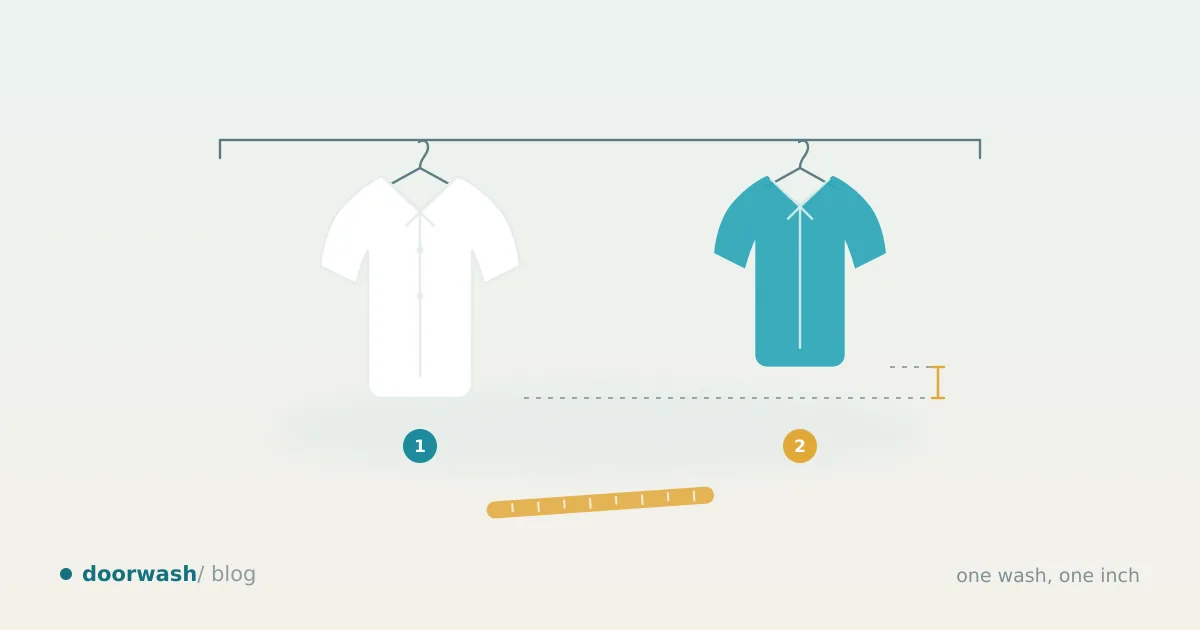
You got a shirt stitched. You stood in the shop while he ran the tape across your shoulders and wrote the numbers in a small notebook. The trial fit was perfect. You paid him and you were happy.
Two washes later the sleeve sits above your wrist bone. The collar button pulls. You tuck the shirt in and it climbs out again by noon because the length is gone.
You think he cheated you on cloth. He didn't. The cloth went home and shrank in your bucket.
Cotton is stretched before you ever buy it
Yarn is pulled tight on the loom. It gets pulled again at the mill during finishing, when the fabric is dragged through rollers under tension and dried in that stretched state. The bolt you saw on the counter is longer and thinner than the fabric actually wants to be. It is holding that stretch like a spring.
Then water gets in. The fibres swell, the yarn relaxes, the weave pulls back to its resting size, and nobody can put it back.
Three to five percent on decent shirting cotton. More on a loose weave, and khadi will move further than that. Three percent of a sleeve is close to an inch. Three percent off the body length is an inch and a half. That is the entire difference between a shirt that stays tucked and one that doesn't.
What Patna does to speed it up
Heat is what drives shrinkage, and we hand our clothes plenty of it.
The water from the tank on your roof in May is not cold. It sits in the sun all afternoon and comes down the pipe warm enough to open the weave right up. Then the shirt gets scrubbed. Then it gets wrung, twisted into a tight rope over the drain, which drags the yarn hard in one direction and packs it in the other. Then it goes on the terrace line at two in the afternoon and dries in twenty minutes, locking in whatever shape it had when you pegged it.
Four steps. Each one takes a few millimetres. Together they take the shirt.
Ask one question at the cloth shop
Sanforised hai?
Sanforising is a finishing process that shrinks the fabric on purpose, under control, before it is sold. A sanforised shirting will move about one percent and then stop. Unsanforised cotton, usually the softer and cheaper stuff, has all of its shrinking still ahead of it, and it is going to do that shrinking on you.
If the shopkeeper says no, or shrugs, shrink it yourself before it is cut. Soak the piece in a bucket of plain cold water for half an hour. No soap. Hang it, let it dry all the way through, then carry it to the tailor. You lose an evening and you keep the fit. Old darzis in Patna used to do this without being asked. Ask, and a lot of them still will.
The first wash is the one that counts
Cold water. Real cold, from the ground tap in the morning, not the roof tank in the afternoon.
Ten minutes in the bucket. No overnight soak, no brush, no thapi.
Do not wring it. Press the water out between your palms, then roll the shirt in a dry towel and press the roll. It takes thirty seconds and it saves the shoulders.
Dry it on a hanger with the top two buttons closed, in shade or on the shaded side of the terrace. Not folded over the rope, and not clipped at the shoulders. A wet cotton kurta is heavy, and a thin wire hanger will push two little horns into the shoulder line that never come out.
Iron it while a bit of damp is still in it. A dry iron at full heat on bone dry cotton sets the crease and pulls the seam.
If it has already shrunk
You can claw a little back. Wet the shirt fully, lay it flat on a towel, and pull gently along the length, a few inches at a time, working down the body and the sleeves. Let it dry flat. You will recover some of it. You will not recover all of it.
The better move is to walk back to the tailor. Most of them leave half an inch to an inch of allowance in the side seam and inside the sleeve for exactly this. He can let it out in ten minutes for almost nothing. Go early, though. Once the shirt has been washed and sunned twenty times, opening an old seam leaves a faded line down the middle of the new one.
Clothes here rarely die of age
They die of one warm bucket and one hard twist, repeated until the shirt no longer fits the person it was cut for.
That is the whole reason we wash the way we do at DoorWash. Cold water, sorted by fabric, no wringing, dried without cooking the cloth. Your shirt comes back the size it left.
You paid a tailor to measure you. Let the measurement survive the wash.