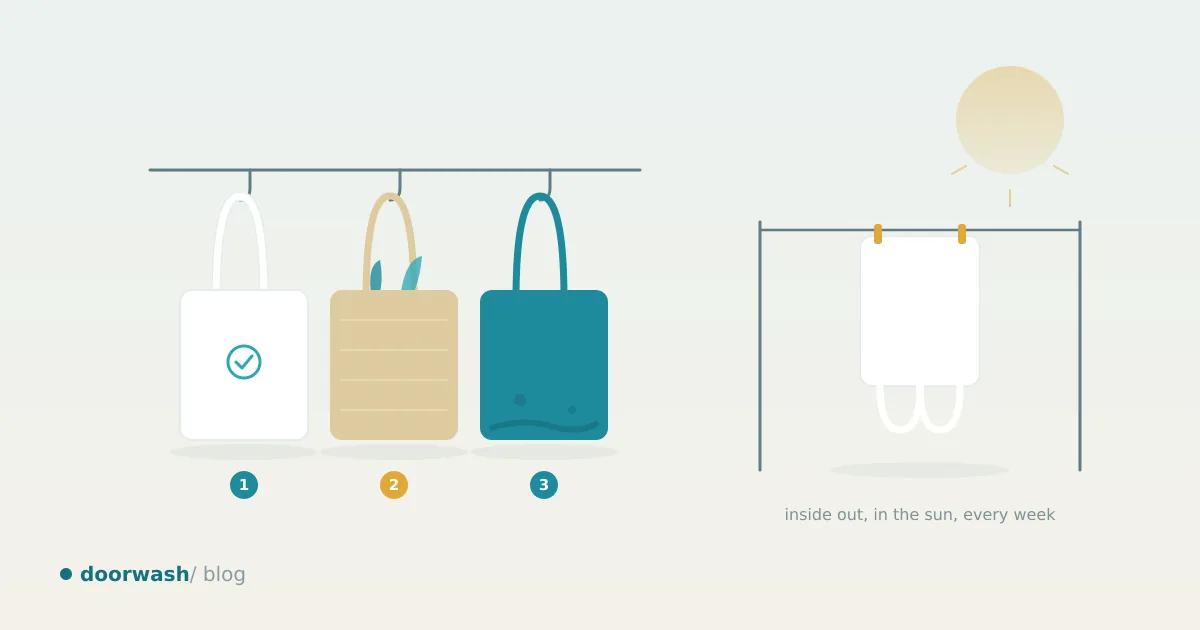
Go to the hook behind your front door. There is a cloth bag hanging there. Maybe two.
Pick one up and open it. Smell it.
That bag has been to the market more times than you can count. It has carried potatoes with the soil still on them. It has carried rohu from the fish seller, wrapped in one thin layer of newspaper. It has carried a Sudha packet that split at the corner and leaked into the seam. Then it went back on the hook. Then it went to the market again.
Nobody washes the jhola. It is the dirtiest piece of cloth in your house, and it touches your food every single week.
How the jhola took over
Bihar banned thin plastic carry bags years ago. Patna adjusted. The sabzi wala outside your gate started asking, "Jhola laaye hain?" Everyone bought a few cloth bags, a jute one from a stall, a printed one from a wedding, a green one from the supermarket on Boring Road.
That was a good change. Less plastic in the drains, less plastic in the cows.
But a plastic bag was thrown away after one trip. A cloth bag stays. It comes home with whatever leaked into it on Tuesday and goes out again on Friday. Cloth holds things. That is what cloth does.
What is actually living in there
Think about one normal week.
Monday, a kilo of chicken from the shop near your lane. The bag under it gets a few drops of raw juice. You don't see them. The cloth soaks them in.
Wednesday, spinach and dhaniya, wet from the seller's sprinkling. The bottom of the bag stays damp for a day.
Saturday, onions and potatoes from Bazar Samiti. Dry soil settles into the corners.
Now it is Sunday. You put bread in that same bag. Grapes. Guava you will eat without washing because it looks clean.
Raw meat juice, damp cloth and a warm Patna afternoon is exactly how bacteria like to live. Salmonella and E. coli survive on fabric for days. Food safety researchers have tested reusable shopping bags and found them carrying gut bacteria. The bags that had never been washed were the worst.
You would never wipe your kitchen counter with a cloth that had raw chicken on it and then put roti down on it. The jhola is the same thing. It just hangs on a hook, so nobody thinks of it that way.
The smell is the warning
A clean cotton bag smells like nothing.
If yours smells sour, something spilled and stayed. If it smells like fish, the fish is still in it. If it smells musty, it never dried after the monsoon. Your nose already knows. Believe it.
Look at the seams too. Turn the bag inside out. The dark line along the bottom fold is old milk, old meat juice and old soil, pressed together. That line does not come off with a shake.
How to keep it clean
This is simple. It just has to become a habit.
Keep one bag for raw things
Fish, chicken and mutton get their own bag. Pick a colour you will remember, one that looks nothing like your other bags. That bag never carries fruit, bread or anything you eat raw.
Wash cotton bags every week
Cotton handles hot water well. Wash it with your towels, at the hottest setting the bag's fabric allows. Turn it inside out first so the seams get the water. Dry it in direct sun until it is fully dry, both sides. Sun on cotton does real work.
Treat jute gently
Jute does not like long soaking. It goes weak and starts to shed. Wash it quickly in cool water with a little detergent, scrub the inside with a soft brush, rinse and hang it in the sun the same morning. Never leave a jute bag folded and damp. It will grow black spots inside a week.
Wipe the shiny supermarket bags
Those stiff bags with the shop logo are usually woven plastic, not cloth. Hot water and a hot iron will melt them. Wipe the inside with soapy water, rinse, and dry them open. If the inside is torn or stained deep, throw it out and use a cotton one.
Keep more bags than you need
Have three or four. One is always on the line drying while the others go to the market. A bag that has to be used again the same day will go back on the hook wet, and wet is the whole problem.
Empty it the moment you get home
Don't leave vegetables sitting in the jhola on the kitchen floor. Unpack, shake it out over the dustbin, and hang it open so air goes through it. A folded bag in a scooter dicky in October is a closed, warm box.
Before Chhath and Diwali
The next few weeks are the busiest market weeks of the year in Patna. Sugarcane, suthni, sweet potato, coconuts, bananas by the bunch, fruit for the soop. Everything for Chhath goes into a bag and comes home. A lot of it gets offered with care and eaten as prasad.
That food deserves a clean bag. Wash every jhola in the house this weekend, before the shopping starts. It takes ten minutes and a sunny afternoon.
If your week does not have that afternoon in it, put the bags in with your DoorWash pickup. We wash them inside out, dry them properly, and bring them back folded. Then hang them back on the hook, and this time they will be clean.