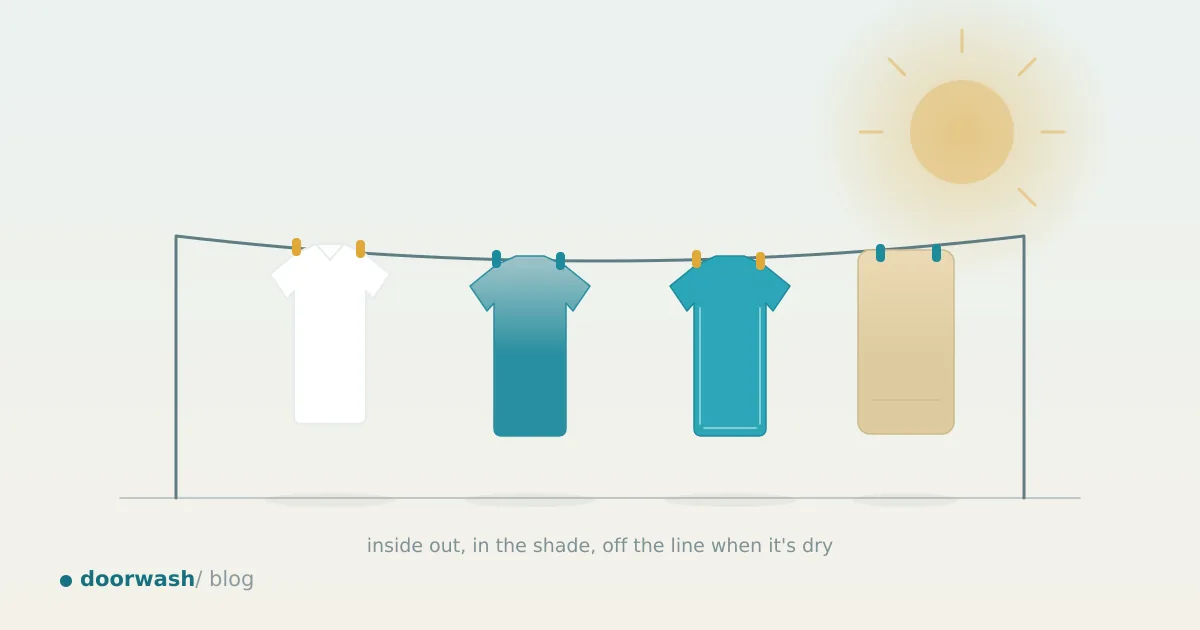
Pull out the navy kurta you bought before Durga Puja last year. Take it to the window and hold it up.
The shoulders have gone grey. The back is still navy.
Nothing spilled on it. You washed it the way you wash everything else. It faded standing still, on your line, in the sun.
Sunlight takes colour apart
Dye is a chemical bond sitting on the fibre. Ultraviolet light breaks that bond. The colour does not rinse off and go down the drain. It comes apart exactly where it sits, and what is left reads as brown, or grey, or a chalky version of the thing you paid for.
Patna hands out a lot of ultraviolet. On a clear September afternoon, with the rains packing up, a roof in Kankarbagh at two o'clock is hard light. In May it is savage. Your terrace in May will do more damage to a red cotton kurta in one afternoon than a capful of bleach would.
Wet cloth fades faster than dry cloth
This is the part almost nobody knows, and it explains everything.
A wet fibre is swollen and open. Water pulls loose dye up to the surface of the cloth, where there is nothing to shield it. Sun hits the dye directly. A soaking shirt in strong sun loses colour many times faster than the same shirt on your back in the same sun.
So the three hours your clothes hang out dripping are the most expensive three hours of their life. You wear that kurta for six hours in the evening. It dries on the roof for five hours at noon. The roof is doing the damage, not the wearing.
Look for the line across the middle
Fold a bedsheet over the wire on your roof and one half faces the sky. Do that every week for a year and there is a pale stripe down the middle of the sheet. Look at your sheets. It is there.
Same thing on shirts. Hang a shirt on a hanger on the balcony grill and the shoulders take the sun straight down while the rest of it stays in its own shade. Shoulders go first. Then collars. That is why the kurta looks worn out from the top even though the cloth is fine everywhere else.
Your clothes were dry at one o'clock
A cotton shirt on a Patna roof in April is bone dry in forty minutes. A pair of jeans takes two hours.
You hung the load at eleven and came up at six, because that is when you got free. Four extra hours of ultraviolet on cloth that had nothing left to give up. Every one of those hours cost you colour and got you nothing back.
Set an alarm if you have to. Dry is dry.
Turn everything inside out
One habit fixes most of this. Turn coloured clothes inside out before you hang them. The inside surface takes the sun and the outside surface, the one people see, sits in shade. It costs you four seconds per garment.
Then a few more things worth doing:
- Dry darks in shade with air moving through. A shaded balcony with a breeze off the river dries a shirt almost as fast as open sun, minus the bleaching.
- Use early morning or after four in the evening if you must use the roof. Eleven to three is the worst window in the day.
- Rinse properly. Detergent left in the cloth is alkaline, and alkaline residue speeds up fading in sunlight. The extra scoop of surf hurts twice.
- Be strictest with reds, maroons, turmeric yellows and cheap block-printed cotton. Those dyes give up first. A new dark kurta loses most of its colour in its first five or six washes, so those are the ones to protect.
- Keep synthetics out of hard sun completely. Ultraviolet eats elastane. That is how a track pant waistband goes slack and a dri-fit shirt goes dull and papery after one summer.
Whites are the exception
Turn all of this around for white cotton. Sun is the best thing that ever happened to a white school shirt. It breaks down the yellow, it kills the damp smell, it costs nothing, and it does not fade what is already white. Cotton nappies, bedsheets, ganjis, banians, school uniforms. Put them face up in full sun and leave them.
Two things stay out. White silk and white wool go yellow in sunlight instead of whiter. A silk saree and a shawl dry in shade, always.
The short version
Your washing machine is not killing your clothes. Your detergent is probably not either. The roof is.
Sun on white cotton is free bleach. Sun on a wet coloured kurta is the same bleach doing damage you cannot reverse.
We dry every coloured garment indoors at DoorWash, on racks with air pushed through them, because a controlled room does the same job as a Patna roof without the cost. You can do it at home too. Inside out, in the shade, and off the line the moment it is dry.