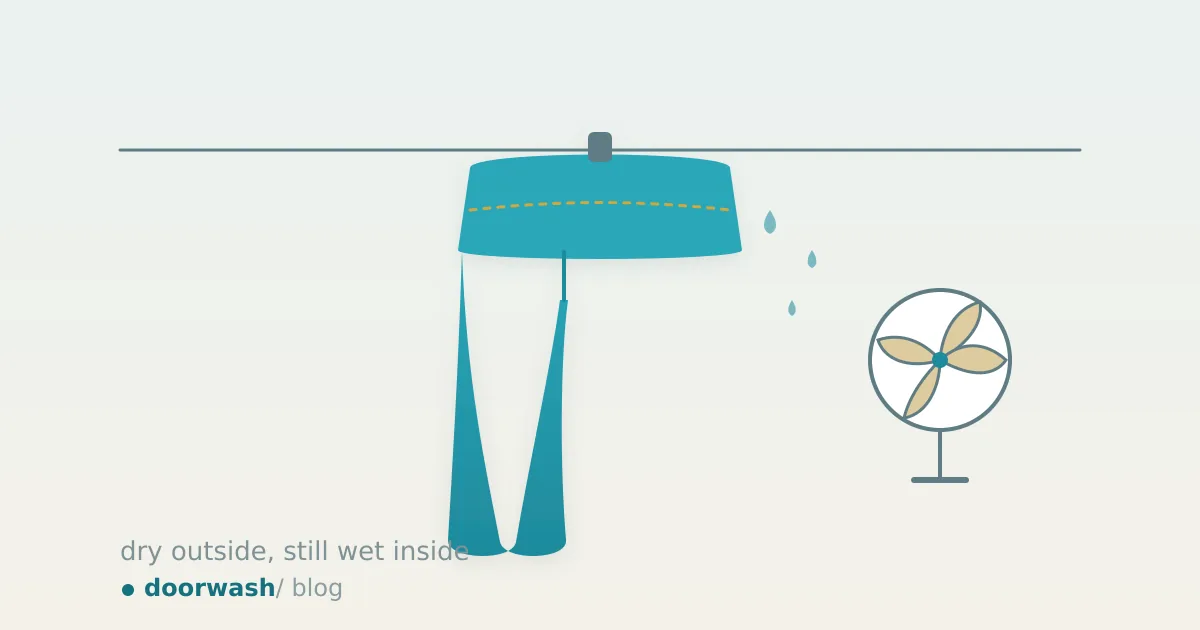
Take your jeans off the line and feel them. The outside is dry. Now push your thumb into the waistband, right where the button sits. Cold. Damp. That is the part that presses against your skin from morning till night.
You hung them out two days ago. The wind did its job on the surface. It never reached inside.
Denim holds water like nothing else you wear
A shirt is thin. It dries before your tea goes cold. Denim is cotton woven tight and thick, made to survive years, and that same weave drinks water and refuses to let go. A soaked pair of jeans can carry close to a litre. Most of it hides in the places air cannot get to. The doubled waistband. The stitched seam running down the leg. The four layers folded at the back pocket.
In Patna in July the air is already near full of water. Some afternoons it sits at ninety percent. Wet cloth dries by handing its moisture to drier air around it. When the air has nothing to spare, the drying just stops. So the surface goes stiff and dry and the core stays wet, and you cannot tell by looking.
You pull them on anyway because the auto is at the gate. Now you are wearing a damp band around your waist for nine hours in the heat.
The smell is not you
Wear those half-dry jeans through a Patna day and by evening they carry a sour, closed-cupboard smell. That is not sweat you failed to wash out. It is bacteria. Damp cloth at body warmth is exactly what they want, and the deep seams stay damp longest. They feed, they multiply, they leave the smell behind.
Spray more deodorant and you add one more thing for them to eat. The only real fix is getting the cloth fully dry, seams and all, and keeping it dry.
The blue that runs onto everything
New dark jeans bleed. That indigo is not fixed to the thread the way you think. Wet it, press it against something lighter, and it moves. Hang a fresh pair next to your white kurta on the same wire in the damp and you will find a blue shadow on the kurta by morning.
Then there is the road. Ride down Ashok Rajpath after an hour of rain and the water that sprays up your leg is not water. It is drain runoff carrying grit and oil and whatever the gutter held. It sinks into denim and dries into a dull grey line up the calf. Rubbing it with a wet cloth pushes it deeper into the weave. This kind of stain needs a proper soak and wash, not a quick dab.
Jeans do not need washing after every wear
This part surprises people. A pair of jeans worn on a normal dry day is fine for four or five wears before it needs the machine. Washing denim too often fades it and wears the fibres thin. That is real.
The monsoon breaks that rule. The moment jeans get soaked, splashed, or worn damp all day, the math changes. Now they are wet cloth against skin in warm air, and they need to be washed and fully dried before they go back on. Judge by what happened to them, not by a fixed number.
Drying a pair of jeans when the sky will not help
If you are doing it at home, do it right.
Turn them inside out. The seams and pockets are on the inside, and that is where the water hides, so put those layers facing the air.
Do not fold them over the wire in a U. That traps the wettest part in the middle. Hang them by the waistband instead, clipped open and wide so the loop of the waist is round and air moves through the legs.
Put a fan on them. Moving air is what finishes the job when the sun is gone. A ceiling fan over an open pair does more in a few hours than a still balcony does in two days.
Or hand them over
Here is the honest problem. A washing machine spins jeans, it does not dry them, and in a Patna monsoon your flat has no dry air to give. So the jeans sit half-dry for three days and you run out of clean pairs and end up wearing the damp ones. That is how the smell and the itch start.
This is the whole reason DoorWash exists. We pick the jeans up from your door, wash them properly, dry them all the way through with machines that do not care what the sky is doing, and bring them back folded and ready. You get the pair back dry inside and out. You get your evenings back too.
Feel the waistband tonight. If it is cold, you already know.