You have had your second bath of the day, because it is June and this is Patna. You pull the towel off the hook and drag it across your back. The water moves. It does not leave. You go over the same patch twice, then a third time, and you still walk out to the fan half wet.
The towel is not old. It is soft. It smells like flowers.
That is the problem.
The blue bottle is not soap
Detergent and softener do opposite jobs. Detergent grabs oil and drags it off your clothes into the water. Softener puts oil back on.
That is not a side effect. That is the design. Inside that bottle are molecules with a positive charge at one end and a fatty tail at the other. Wet cotton carries a slight negative charge, so the charged end grips the fibre and the tail stands up and out. Millions of tiny tails standing up is what your hand reads as softness.
It is grease. Thin, perfumed, spread evenly over every thread you own.
On a bedsheet you will never notice. On a towel it is the end of the towel.
A towel has exactly one job
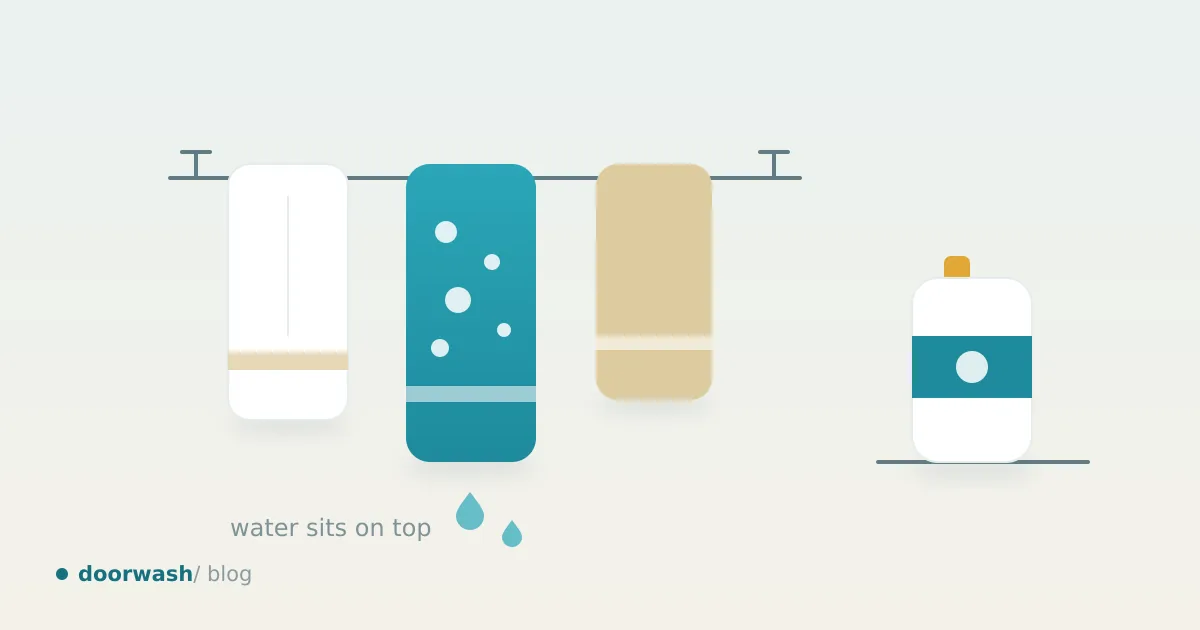
Cotton dries you by pulling water inside the fibre. That is why a good towel feels almost thirsty when you touch it. Put a water repelling film around each fibre and the water no longer goes in. It sits on top in small beads and you push those beads around your skin until you give up.
Then the second half of it. A towel that has taken water has to hand that water back to the air. Yours hangs on a hook behind the bathroom door, in a room with one small window and no fan, in August. A coated towel holds moisture in a way a bare one does not, so it stays damp longer, and damp cloth in Patna humidity starts to smell within a day.
So you wash it and add a little extra softener, because the softener smells clean.
That loop is worth stopping.
The capful you pour into the bucket
In a washing machine, softener goes into its own small drawer and gets released into the final rinse, into a full drum of water. It arrives already diluted.
In a bucket you tip a capful straight onto a heap of wet clothes sitting in maybe fifteen litres of water. That is several times the concentration the stuff was built for, and it does not spread. It lands.
Two months later you find a grey, greasy looking patch on a light kurta that no amount of Surf will lift, and you blame hair oil or the road. It was the softener, sitting undiluted on one spot while the cloth dried.
If you are going to use it in a bucket, mix the cap into the water first. Stir it. Then put the clothes in.
Your dri-fit shirt is the worst case
Polyester does not absorb water, so the sour smell in a gym shirt is not sweat left in the cloth. It is bacteria living on body oil that has stuck to the fibre.
Softener coats that oil with more oil. Next wash, your detergent has to get through a waterproof layer to reach the thing that stinks, and it does not. You wash the shirt, dry it fully, wear it for ten minutes on a Saturday morning walk near Gandhi Maidan, and the smell is back like it never left.
Keep softener away from anything synthetic. Gym clothes, jerseys, running gear, anything stretchy.
Stiff clothes are not asking for softener
Most people in Patna started using softener because clothes came off the line hard as cardboard. That stiffness is usually soap that never rinsed out, dried inside the weave. Adding grease on top of dried soap does not remove the soap.
Rinse twice in clean water instead. Watch the second bucket. If the water is cloudy, it needs a third.
If your towels are genuinely hard from the water in your area, put half a mug of plain white vinegar into the last bucket. It strips the leftover detergent and the mineral film. The smell disappears as the cloth dries. Then hold the towel by two corners and snap it hard three or four times before you hang it. That whipping opens the loops and does more for softness than any bottle.
Where softener is fine
Bedsheets. Cotton kurtas. Dupattas. Curtains. Things you want smooth against your skin that have no work to do.
Keep it off towels, napkins, kitchen cloth, gym wear, and anything a baby touches. A newborn's skin does not need perfume and a film, and a langot that repels water is useless.
What we do
At DoorWash we wash without softener unless you ask for it. Your towels come back absorbent, your dri-fit comes back without the sour note, and everything gets rinsed until the water runs clear, which is the part most of us skip at home on a Sunday when the bucket is full and the day is already gone.
Go check your towel tonight. Hold it under the tap for a second. If the water beads and rolls off, you now know why.