It's Sunday. Around nine. The week's clothes are on the floor near the bathroom in Kankarbagh, or Rajendra Nagar, or wherever you sleep. Six shirts. The jeans. The socks you keep meaning to throw out. The pile has been growing since Tuesday and it stops growing today because today you deal with it.
So you fill the bucket. The water pressure is low, like always, so the bucket fills slow. You wait. You sort the whites from the colours. You scrub the collars by hand because the machine never gets collars. Then the power goes, mid-spin, and the machine sits there full of water and half-clean clothes, and you wait again.
By the time the last shirt is on the terrace line it's past noon. The sun is brutal now. You've missed the good drying window and the cool part of the day both. Your back hurts. And here's the part nobody says out loud.
The morning is gone.
The Hidden Cost of Laundry
That was the plan for Sunday, wasn't it. Sleep in a little. Chai on the terrace. Call your mother. Meet a friend at a place on Boring Road. Sit and do nothing, which you've earned. Instead you spent it wet to the elbows.
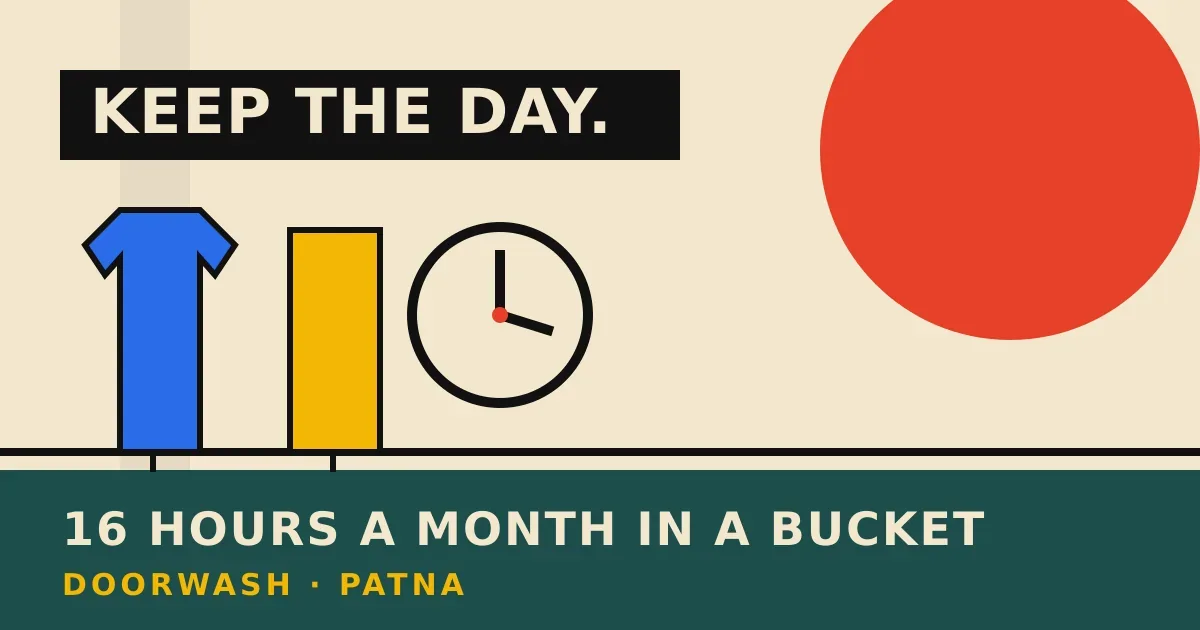
Let's do the real math. Sorting, soaking, washing, wringing, hanging, and later folding. Call it three hours if the power behaves. It rarely behaves. So four. Four hours, every Sunday. That's four Sundays a month. Sixteen hours. Two full working days, gone, every single month, to a bucket.
And you didn't even do it well. Hand-washing in hard Patna water leaves the whites a little grey. The clothes that dried in that harsh afternoon sun came out stiff and faded at the shoulders. You did four hours of work and your shirts still look tired by Wednesday.
People think the cost of laundry is the soap. A hundred rupees of detergent, a bit of water. That's not the cost. The cost is the one thing you can't buy more of.
The best morning of your week.
Why DoorWash Exists
This is the whole idea behind DoorWash. Not that we wash better than you, though the machines and the softer water do help. The point is simpler than that. We take the bag on Saturday evening. We bring it back clean, dry, and folded. You are not in the equation.
You get the four hours.
What Four Hours Really Means
Think about what four hours is. It's a long, slow breakfast. It's finishing the book on your bedside table. It's actually resting, the kind where you don't glance at a pile in the corner and feel guilty. It's your kid asking you to come outside and you say yes because there's nothing you have to do first.
You work hard all week. You do not owe your one free morning to a bucket.
Keep the Day
Try it once. This Sunday, don't fill the bucket. Hand us the bag on Saturday. Then sit on your terrace with your chai and watch the morning go by slow, the way a Sunday is supposed to.
That's the whole pitch.
We'll handle the clothes.
You keep the day.