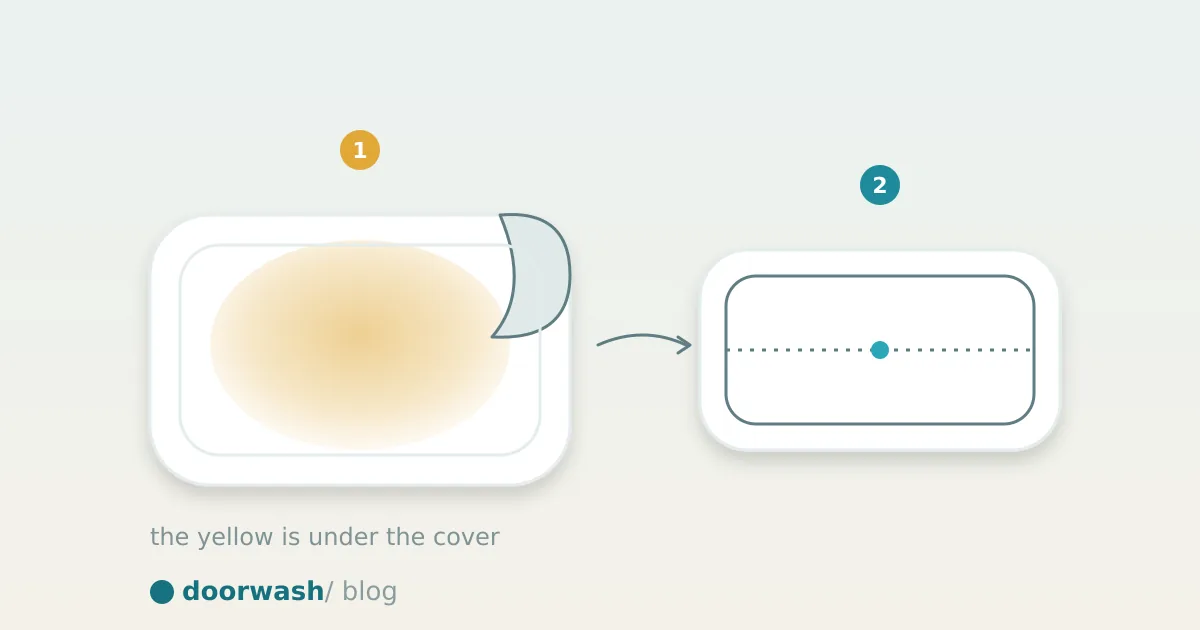
Take the cover off your pillow. Right now. The one you slept on last night.
Look at the pillow underneath.
There is a yellow shape on it. About the size of your head. Brown at the edges if the pillow is old.
That is you. Months of you, soaked in.
Where the yellow comes from
Three things. Sweat, hair oil, and a little saliva.
Patna nights do the sweat part. The fan runs and you still sweat in May and June. Even in the rains the room stays warm and close. Your head is the wettest part of you when you sleep, and it rests in one spot for eight hours. The cover is thin cotton. It soaks through in minutes and looks dry again by morning. You never see it happen.
Hair oil is the one that stains for good. Mustard, coconut, amla, whatever you put in on Sunday and top up through the week. You lie down and your hair presses into the pillow all night. The oil moves into it the way oil moves into any cloth. And oil does not rinse out with water and soap. It sits. It turns yellow. Then it turns rancid, and rancid oil has a faint sour smell you stopped noticing a long time ago.
Washing the cover does nothing
You change the pillowcase every week. Good habit. But the case is a curtain hung in front of the problem.
The sweat and oil are past the cover. They are inside the pillow, in the foam or the fibre or the cotton. Washing the case gets the case clean and leaves the pillow exactly as dirty as it was. You have been sleeping face-down on the same stain for a year.
There is a second guest in there. Dust mites. They eat the dead skin that flakes off you every night, and a warm damp pillow is the best home they will ever find. This is a real reason a lot of people wake up with a blocked nose and blame the weather.
The trap when you finally wash it
So you decide to soak the pillow. Fair enough. Here is the part nobody warns you about.
A pillow is not a shirt. Soaking it is easy. Drying it is the whole battle.
The middle of a pillow holds water like a sponge. The outside feels dry by evening and the core is still wet two or three days later. In a Patna monsoon that core may never fully dry on a line. Wet core plus a warm room equals mildew, growing right where you put your face. Now the pillow smells worse than before you touched it, and that smell does not wash out.
A machine spin pulls most of that water out, which is why a machine-safe pillow survives a wash and a bucket-and-line pillow often does not.
What to actually do
Keep it simple.
- Put a zip protector on the pillow, then the pillowcase on top of that. Two layers. The protector takes the oil and sweat, and a protector is easy to wash and dry. The pillow stays clean underneath.
- Wash the pillow itself every three or four months, and only on a hot dry day when you can get it bone dry. Not the night before rain.
- Foam pillow: never wring it. Press the water out flat, both sides. Wringing tears the foam.
- Fibre or cotton pillow: it needs a proper spin and a long, hard dry, or the core stays wet.
- When a pillow has gone yellow all the way through and stays yellow after a wash, throw it out. A new pillow costs a few hundred rupees. You breathe into it a third of your life.
Where we come in
This is a job DoorWash is built for. We pick the pillows up from your door, wash them properly, and put them through a real drier so the core comes back dry and not damp. That last part is the whole thing. A pillow you soak at home in July goes out wet and comes back off the line still wet in the middle.
Pull one cover off tonight and look. If the pillow is yellow, it has been telling you something for months.