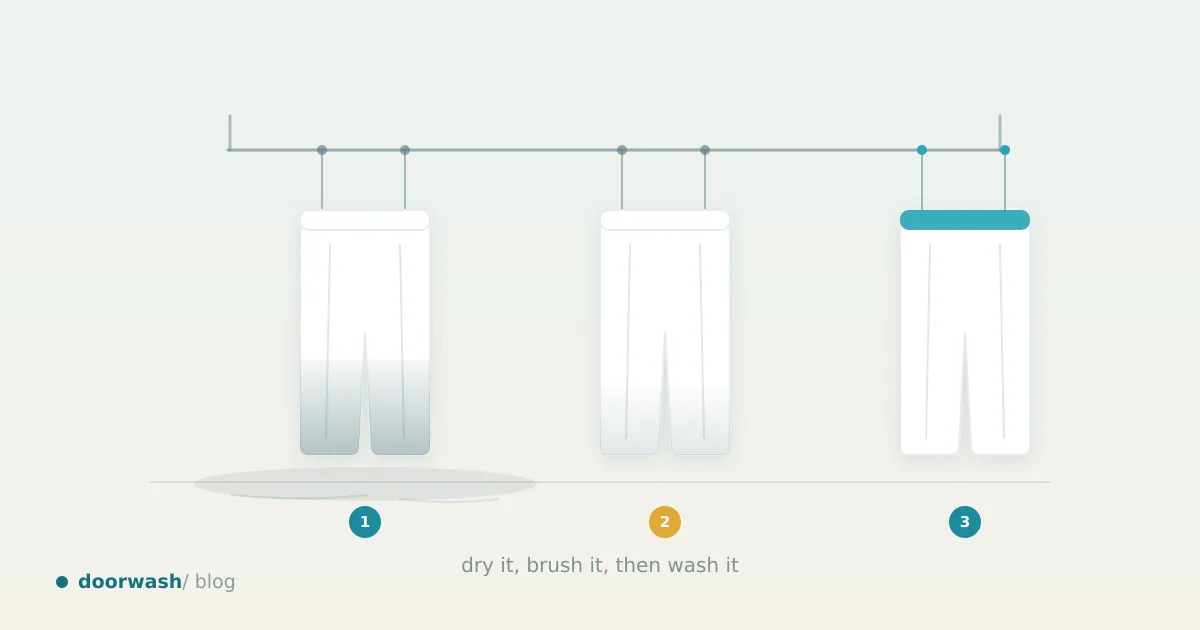
You got off at the Rajendra Nagar crossing on Tuesday and the lane to your gate was under water. Ankle deep. You did not roll anything up. You just walked.
Your trousers are dark from the cuff to the shin. You hung them on the hook behind the door. By Thursday there is a smell in the room and you cannot place it.
The smell is the point. Here is what you actually walked through.
Patna does not have separate drains
In most of the older wards, the storm drains and the sewage lines share the same channels. On a dry day it all flows to the pumping stations. On a day when the rain comes down hard for two hours, those stations fall behind and the channels back up.
The water that rose into your lane came up out of a drain. It did not come down out of a cloud.
So four things soaked into your hem. Rainwater. Drain water. Road silt. And the oil that drips off every vehicle in this city and lies on the tar waiting for rain.
Detergent is good at one of those four.
Three problems, six inches apart
The silt. Patna's road dust is fine and grey. Suspended in water it behaves like thin paint, and it goes into the weave rather than onto it. Cotton is a mesh of twisted fibres with gaps between them. Wet grit fills the gaps. Then it dries in there and locks. That is the grey cast at the bottom of your trousers that never comes out, the one you quietly decided was just the colour now.
The oil. Engine oil, diesel, brake dust. Oil does not dissolve in cold water, and your tap in September runs cold. Rub soap on it in a bucket and you spread a thin film over a wider area. The stain looks smaller. There is more of it.
The living part. Sewage carries gut bacteria. A rinse does not bother them. Give them a damp hem, silt to sit in and a closed room with the fan off, and by the second day they are producing the thing you smelled on Thursday. That smell is not dirt. It is what they make.
Do not touch it while it is wet
This goes against instinct. Everyone comes home and drops the wet trousers straight into a bucket.
Don't. Hang them up and let the hem dry all the way. An hour under a fan is enough.
Dry silt is a powder. It lets go. Turn the trousers inside out, take them to the bathroom floor or the balcony, and work the hem with a stiff dry brush until nothing more falls. You will be surprised how much comes off cloth you had written off as stained. Every gram you brush out now is a gram you are not grinding deeper in a bucket later.
Then wash it, and wash it alone
Do not put it in with the week's clothes. You will move drain bacteria onto your ganji and your child's school shirt. One bucket, one pair of trousers.
Rinse before you soap. Hold the hem under a running tap, inside out, and let the water carry the loose grit off. Keep going until the water coming off the cloth runs clear. Two minutes here does more than the next ten.
Now warm water. Read the care label, and if the fabric allows it, wash cotton at 40 degrees or hotter. Warm water is what breaks the oil. We wash cold nine months of the year in Patna, and that habit is exactly why the grey stays in the hem.
For the bacteria, use oxygen bleach. Sodium percarbonate, sold as an oxygen whitener or a laundry booster. A spoon in hot water, half an hour, then wash. It is safe on colours. One capful of antiseptic liquid in a full bucket is far too dilute to disinfect anything, so do not count that as a step.
Then dry it in full sun and dry the hem all the way through. Feel the cuff between your fingers before you fold it. A double-stitched seam holds water long after the leg feels dry.
Shoes and socks are a separate job
If the water went over your shoes, the socks come off at the door and go into their own bucket. The shoes do not go into the almirah. Wet leather in a September room grows mould in three days, and polish only buries it.
For the rest of this month
The rain will keep doing this until October. You cannot fix the drain. You can change two small things.
Keep a pair of rubber slippers inside your gate and change into them at the edge of the water. And roll the cuff up twice before you step in. A folded cuff is a five minute wash. A soaked one is a forty minute wash.
Then stop wearing your good office trousers on days when the sky looks like that. Carry them in a bag and change at the office. People do it. It is not strange.
If you are not going to do any of this
Most people won't. Life gets in the way, and standing over a bucket with a brush at ten at night is nobody's idea of an evening.
That is the job DoorWash does. The trousers go in a bag, we pick them up from your door, they get washed separately at the right temperature, and they come back dry and pressed. You never see the bucket.
Either way, do one thing tonight. Take the trousers off the hook behind the door.