Late November, the mornings go grey, and somebody in your house drags the trunk out from under the bed. Or pulls the big zipped bag down from the top of the almirah, the one with the broken zip pull. Inside are last year's sweaters. They smell like the bag.
One of them does not fit anymore.
It did not shrink in the trunk. It shrank in March, in a bucket of hot water, and you have been waiting nine months to find out.
What hot water actually does to wool
A wool fibre is not smooth. Under a microscope it is covered in tiny overlapping scales, like the shingles on a roof. In cool water those scales lie flat and the fibres slide past each other. That sliding is why a sweater stretches when you pull it on and comes back to shape after.
Heat lifts the scales.
Now add your hands. You scrub the collar, you twist, you squeeze the water out. Lifted scales on one fibre hook into lifted scales on the next, and they stay hooked. The knit tightens on itself. The sweater comes out shorter, thicker, stiffer, and about two sizes down.
This is felting. There is no reversing it. No conditioner, no steaming, no shop in Hathwa Market can unhook those scales. That sweater belongs to a smaller person now.
So the rule is boring and absolute. Cold water. Tap water in a Patna December is already cold enough to do the job. Mild detergent, or a wool wash, or even shampoo at a pinch. Let it sit fifteen minutes. Press the soap through the wool with a flat palm. Do not rub wool against wool. Do not wring it.
Your clothesline is stretching the sleeves
Pick up a wet sweater and feel the weight. Wool holds up to a third of its own weight in water, and a heavy pullover comes out of the bucket at two or three kilos.
Hang that on the nylon line by the shoulders and gravity works on it for six hours.
Wool is springy when dry and completely lazy when wet. Whatever shape it is holding while it dries is the shape it keeps. That is where the sleeves down to your knees come from. That is where the two little horns on the shoulders come from, one for each clip.
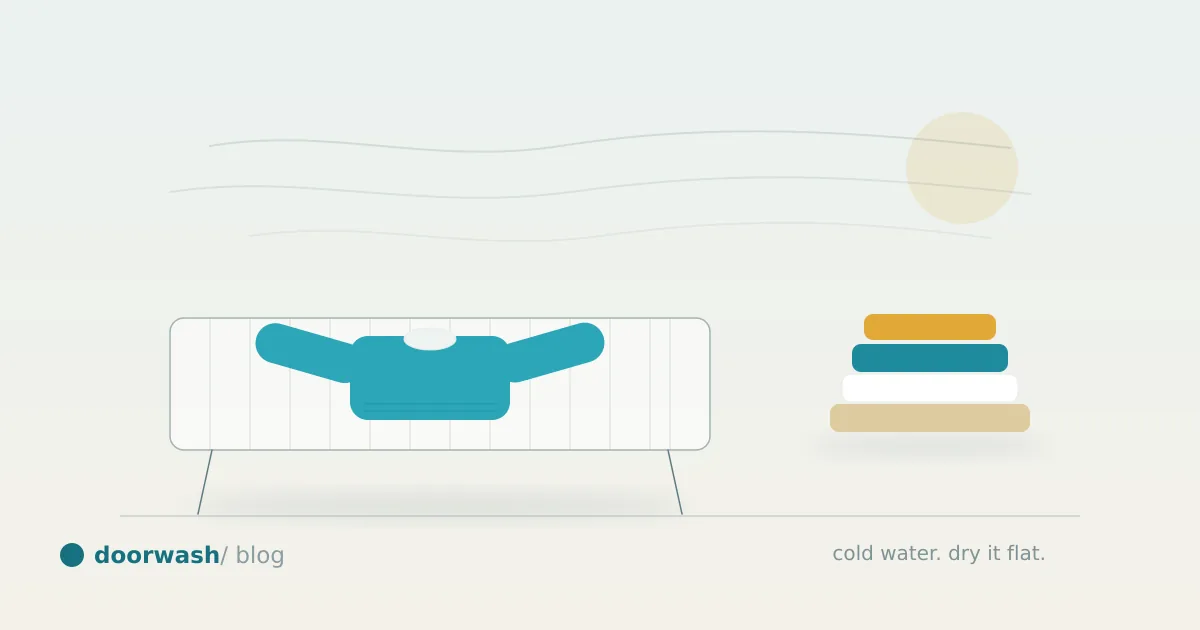
Instead: lift the sweater out of the bucket with both hands underneath so it does not hang from one point. Press it against the side of the bucket to push water out. Lay it on a dry bath towel, roll the towel up like a chapati roll, and press down on the roll. The towel takes most of the water. Then open it out and lay the sweater flat on a second dry towel, on a cot or a table, and push the sleeves and the hem back into the shape you want.
Nothing dries in a Patna January
Everyone knows the monsoon problem. Winter is quietly worse for wool.
From late December the fog sits till eleven in the morning. Humidity stays above eighty percent for days at a stretch. The sun shows up as a pale bulb behind cloth and goes down at five. Cotton takes two days on the line in that weather. Thick wool takes three.
Wool that stays damp for three days starts to grow mildew in the middle of the knit, where you cannot see it and cannot smell it yet. Fold it, put it in the almirah, close the door. In November you open the bag and there it is, that flat grey smell you blamed on the naphthalene.
Dry it indoors instead. Flat on a towel, in the room you use, with a ceiling fan on the lowest speed moving air across it. Turn it over after four hours and change the towel underneath if it feels wet. Keep it away from the room heater and away from the blower in your car. Direct heat on wet wool shrinks it just as well as a hot bucket does.
A sweater dried this way takes a day and a half. Plan for that. Do not wash it on the coldest night of the year and expect it at breakfast.
You are washing it far too often anyway
Wool does not hold smell the way cotton does. It picks up odour, releases it into moving air, and comes back clean on its own. Five or six wearings between washes is normal. Eight is fine.
Hang it over the back of a chair overnight instead of folding it straight into the almirah. Spot clean the chai on the cuff with cold water and a fingertip, right then, not in March.
And remember what sits under the sweater. In a Patna winter your sweater never touches skin except at the neck and wrists. The ganji is absorbing everything. Wash the ganji every day and the sweater every month.
Two things break this rule. The school sweater, which is worn six days a week and collects lunch. And the muffler, which spends the whole day across your mouth and nose and is doing the same work a towel does.
In March, wash it before it goes in
Silverfish and moths are not interested in clean wool. They are interested in what you left on it. Sweat salt, hair oil, the dal that missed the plate, a drop of milk. That is the food. The sweater is just where dinner is served.
So the last wash of the season is the important one. Wash it, dry it completely flat, and make sure it is bone dry before it goes into the bag. Squeeze a fold in your fist for a few seconds. If it feels cool against your palm, it is still wet. Put a sweater away with any damp left in it and it will come out in November with round grey marks on the shoulders.
Fold woolens, never hang them for storage. Eight months on a hanger does the same thing to the shoulders that a wet clothesline does in one afternoon.
Or hand it over
Every step above is easy and every step above takes a day and a half of your attention in the coldest, foggiest week of the year.
We do woolens the slow way at DoorWash. Cold wash, no wringing, dried flat with air rather than heat, folded and returned in a bag you can put straight into the trunk. Pickup at your door in Kankarbagh, Boring Road, Rajendra Nagar, Patliputra, anywhere in the city.
Send the sweaters in March, when you are done with them. That is the wash that decides whether they fit you next winter.