Take your black formal trousers to the window. Hold them so the light comes in sideways. There it is. A patch on the seat that catches light like plastic, a matching one on the front of the thighs, a hard silver line running down the crease. The rest of the cloth stays flat and dark. Those patches shine.
You have probably blamed the cloth. Cheap material, you thought, or too many washes. It is not the cloth. That shine is fibre that got flattened and melted by an iron, and no detergent in Patna is going to bring it back.
Why cloth looks dark in the first place
A woven fabric is thousands of tiny fibres standing up at every angle. Light hits that mess and scatters in all directions. Your eye reads scattered light as a deep, matte colour.
Press those fibres flat with heat and weight and you have made a mirror. A small, bad mirror. Light now bounces off in one direction, straight back at you, and the spot looks pale and shiny. The dye is still there. The colour never left. The surface changed.
That is why it always shows up on dark trousers and navy blazers and never on your white shirt. White scatters light anyway, so flattening it costs you nothing you can see.
The iron at the corner shop has no dial
Most trousers in this city get pressed on a coal iron. Four kilos of iron with a bed of burning coal inside it and a wooden handle. The man running it judges the heat by habit, by a flick of water on the base, by how the cloth answers. For a cotton kurta he is right nearly every time.
Your office trousers are not cotton. They are a poly-viscose blend, which is what almost every stitched formal trouser in Hathwa Market and Boring Road is made of. Polyester starts to soften somewhere near 230 degrees. A coal iron with a fresh fire in it goes past that without trying. It cannot be turned down. It can only be lifted off.
August makes it worse. Clothes come back from the wash still holding water because nothing in this city has dried properly since June. So the iron sits longer on each panel to drive the damp out. More seconds, more heat, more shine. The trousers you got pressed last week for a wedding took more punishment than the ones you pressed in April.
Cotton scorches, polyester melts
These are two different injuries and people mix them up.
Cotton and linen do not melt. They cook. You get a faint yellow-brown mark that darkens over time, and the fibre underneath goes brittle. Months later a hole opens there in the wash and you blame the machine.
Polyester and nylon melt. The surface fuses into a thin glassy skin. That skin is permanent. It cannot be washed, brushed, or steamed back into fibre, because it is no longer fibre. Rayon and viscose sit in between and do a bit of both.
Wool is the sad one. Wool goes shiny fastest of all, from the shoulders of a blazer down to the seat of a suit trouser, and it happens at temperatures that feel perfectly safe.
The fix costs ten rupees
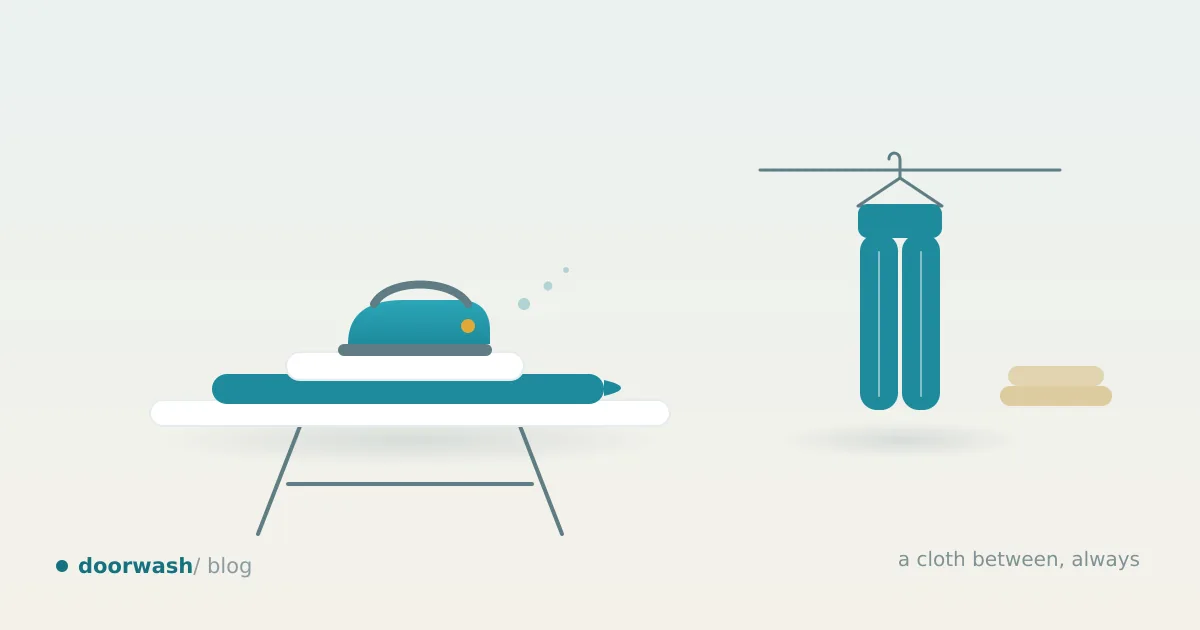
Put a cloth between the iron and the garment. That is the whole technique.
A thin white cotton handkerchief works. An old cotton dupatta works. A plain white gamcha, washed until it is soft and free of dye, works best of all. Dampen it, lay it over the section you are pressing, and iron on top of it. The heat still goes through. The steam still goes through. The hot metal never touches the face of your trousers.
Then three more rules.
Turn dark clothes inside out. Press the crease from the inside where nobody will ever look at the surface.
Keep the iron moving. A stationary iron is a branding tool. Lift and set down, lift and set down.
Go around buttons, not over them. Plastic shirt buttons craze into little cracks when an iron parks on them, and once cracked they break in the next wash.
And test on a hem. Every fabric has a temperature and the inside of a hem is where you find it, not on the thigh.
Can you get the shine out
Sometimes. On wool and cotton, lay a cloth soaked in one part white vinegar to two parts water over the shiny patch, press with steam for a few seconds, lift, and while it is still damp brush the area with a soft toothbrush against the lie of the fibres. You are standing the fibres back up. On a lightly glazed wool blazer this gets you most of the way back.
On melted polyester it does nothing. There is no fibre left to lift. Anyone who promises to remove that shine from a synthetic trouser is going to hand it back to you with the same shine and a bill.
So the real answer is the one nobody likes. Trousers do not need pressing after every single wear. Hang them properly the night you take them off, let the wrinkles fall out overnight, and press them half as often. Fewer passes of the iron is the only thing that reliably keeps a dark trouser looking new.
At DoorWash we press with steam and a temperature dial, dark clothes go under a press cloth, and nothing gets held in one place long enough to leave a mark. Your trousers come back matte. That is how they were supposed to look.