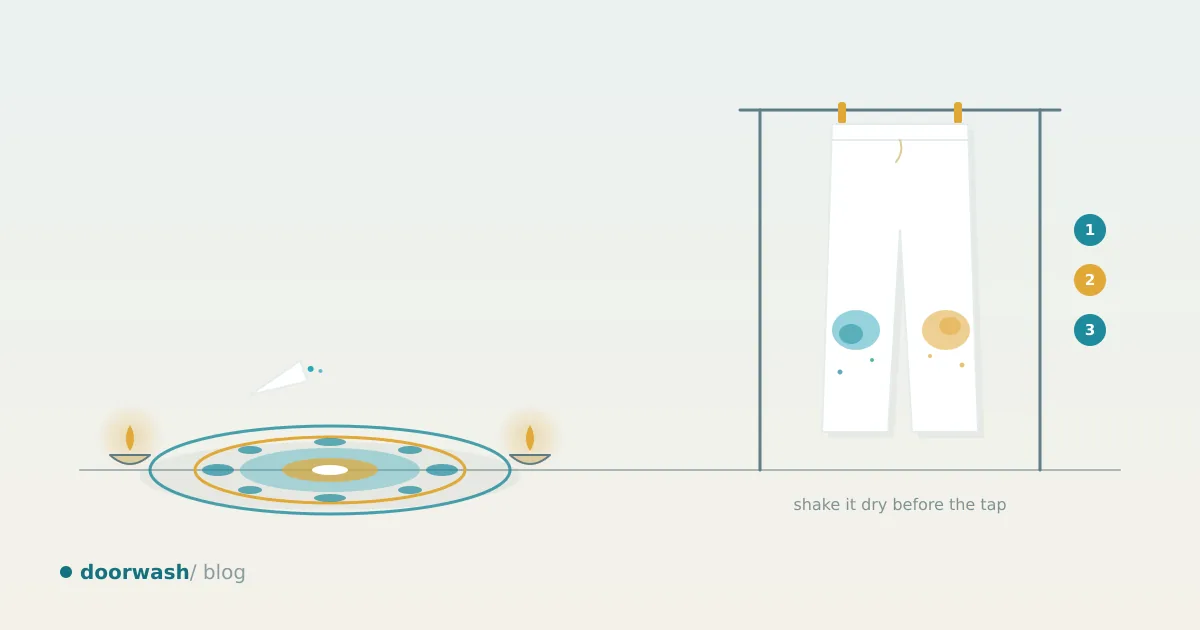
It is the evening before Diwali. The door is open, the diyas are not lit yet, and you are kneeling on the floor of the verandah with a paper cone of pink powder in your hand.
You have been there for an hour. Your knees hurt. The design is almost done.
Then you stand up and look down. There is a magenta patch on both knees of your pajama. A blue smear on the hem of your kurta where it touched the edge of the pattern. Green dust in the fold of your dupatta.
You will brush it off and think it is gone. It is not gone.
What is actually in the packet
The rangoli your grandmother made used rice flour. Some homes in Patna still do. Most of us buy packets from the stalls that come up near the market a week before Diwali, and those packets are something else.
Most market rangoli is ground stone. Usually marble or limestone powder, crushed fine, with synthetic dye mixed in to make the colour loud. That is why it pours so well. That is why the pink is so pink.
Two things follow from this.
The grains are hard and sharp. When you kneel on them, your body weight presses them into the weave of the cloth. They sit between the threads like sand in a carpet.
The dye is strong and it loves water. Dry, it stays on the stone. Wet, it lets go and moves into whatever fabric is nearest.
So the stain on your knees is two stains. One is grit. The other is dye waiting for water.
The mistake everyone makes
You see the colour, you go to the bathroom tap, and you rub it under running water.
That is the worst thing you can do.
The water releases the dye. Your thumb pushes it outward. In thirty seconds, a patch the size of a coin becomes a pink cloud the size of your palm. You have taken a surface stain and made it a dyed fabric.
Hot water is worse. Heat helps synthetic dye bond to cotton. That is how dyeing works. You are running a small dye factory in your bathroom.
Do it in this order
Keep it dry first. Do not let anyone dab it with a wet cloth. Take the garment off and leave it until you can deal with it properly.
Take it outside and shake it. On the balcony or the roof, away from the rangoli. Turn the garment inside out and give it a hard shake. Most of the loose powder will fall.
Lift what remains. Press a strip of packing tape on the stained area and pull it off. Repeat with fresh tape. You will be surprised how much colour comes up on the sticky side. A soft clothes brush or a dry toothbrush also works. Brush in one direction, away from the clean part of the cloth.
Rinse from the back. Now water. Cold, from the tap in the bathroom. Hold the cloth so the stain faces down and let water run through from the inside. You want the colour to leave the way it came in, not travel further into the fabric.
Soak, do not scrub. Mix a little liquid detergent in a bucket of cold water. Put the garment in for thirty minutes. Then press the area gently between your fingers. Scrubbing grinds the stone grit further into the threads.
Check before you dry. Hold it up in daylight. If there is still a shadow of colour, repeat the soak. Do not put it on the line and do not iron it until the colour is gone. Sun and iron heat both lock the dye in for good.
When diya oil got there first
Diwali night has oil everywhere. Mustard oil from the diyas, ghee from the puja thali. If you knelt on a rangoli that was near the diyas, the powder on your knee may be stuck in a film of oil.
Water slides right off oil. So before anything else, rub a drop of dishwashing liquid into the patch with your finger. The same liquid you use on the kadhai. Leave it for ten minutes. Then rinse from the back in cold water and soak as above.
Oil first. Dye second. The other order does not work.
Whites, silks, and the ones you love
A white cotton kurta can take more. After the soak, if a faint pink remains, an oxygen bleach powder in cold water usually lifts it. Read the packet. Never use chlorine bleach on dyed stains. It often turns pink into a strange yellow.
Silk and Banarasi are different. Do not experiment on them at home. Shake off the dry powder, keep the garment dry, and give it to someone who cleans silk for a living. Tell them it is rangoli, and tell them which colour. That information matters.
Next year, kneel on something
The easiest stain to remove is the one that never happened.
Before you start, fold an old bedsheet or a jute bori and kneel on that. Wear the pajama that is already faded. Keep a dry cloth next to you for your fingers, so you do not wipe them on your kurta without thinking.
And if you are making rangoli in your Diwali clothes because the guests arrive in twenty minutes, accept that the clothes may need help tomorrow. That is fine. Just keep them away from the tap until you know what you are doing.
The design on the floor lasts one night. Your kurta should last a lot longer.