Pull it out and smell it. Go on.
That raincoat has been folded under your scooter seat since the first rain in June. Plastic and mildew and old sweat. You stopped noticing the smell weeks ago. The rain kept coming, so it stayed there, damp, in the dark, under a hot seat, for a month.
This is the one thing you use every single day in July and never once clean.
The rain stays out. Your sweat stays in.
A raincoat has one job. Keep water off you. It does that well. The coating on the outside sheds rain like a leaf.
But the same coating works both ways. The sweat coming off your back and arms has nowhere to go. You ride from Kankarbagh to Dak Bungalow with the sun trying to come back out, engine heat rising, no air moving inside that plastic. By the time you park, the inside of your raincoat is wet. Not from the rain. From you.
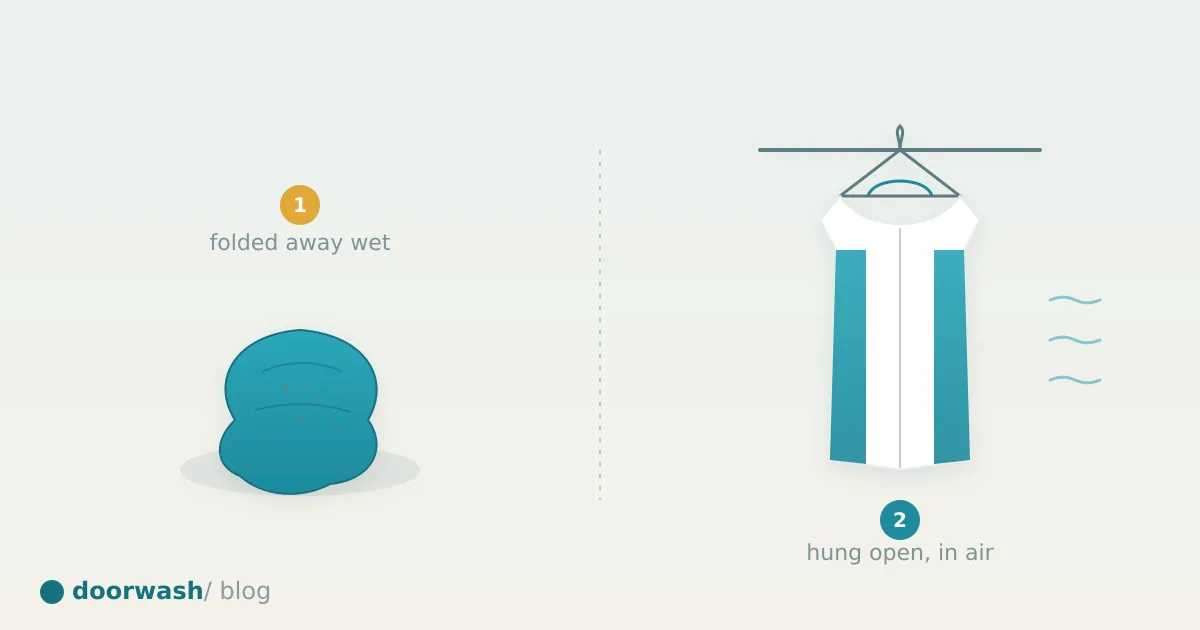
Then you fold it. Wet side against wet side. You push it under the seat and forget it until tomorrow.
What a month of that grows
Warm. Wet. Dark. No air. You could not build a better home for mildew if you tried.
The grey and black speckles you see on the inside are not dirt marks. They are mould, alive, feeding on the sweat and body oil soaked into the fabric. That is where the smell comes from. It is not the rubber. It is the colony living on it.
The seams are the worst part. Water and sweat sit in the stitching and never leave. Look along the inside of your hood and the inside of the elbows. That is where it starts.
You put this on over a clean office shirt. Every morning, the mould goes back on your skin and your collar. The gym shirt that still stinks after a wash and this raincoat have the same problem. Bacteria and mould living deep in the fabric, and a quick rinse never reaches them.
Why you cannot just throw it in the machine
Here is where most people ruin a good raincoat.
They finally get fed up, dump it in the washing machine on a hot cycle, and run it hard. The heat and the spin destroy the waterproof coating. The seams loosen. The next week it leaks at the shoulders and you are wet under your own raincoat, wondering what happened.
A raincoat is not a shirt. It needs the opposite of what a shirt needs.
How to actually clean it
Do it on a dry morning. You need one clear day.
- Fill a bucket with cold or lukewarm water. Never hot. Hot water lifts the coating right off.
- Add a small amount of mild detergent. No bleach. No Surf-heavy scrub. Bleach eats the waterproofing.
- Turn the raincoat inside out. The dirty side is the inside. That is the side you are cleaning.
- Wipe the inside down with a soft cloth. Go slow along every seam, the hood, the underarms, the collar. That is where the mould lives.
- Rinse in clean water twice. Soap left in the fabric holds moisture and brings the smell back.
- Do not wring it hard. Twisting cracks the coating. Press the water out with your hands.
Then dry it right. This is the part everyone skips.
Drying is the whole game
Hang it on a wide hanger, wide open, both sides getting air. Not folded over a line. Not balled up. Open.
Keep it out of direct Patna sun. Strong sun bakes the coating and makes the plastic brittle and cracked. A shaded balcony with a fan pointed at it is perfect. You want moving air, not heat.
It must be bone dry before it goes anywhere. Dry outside is not enough. Run your hand along the inside seams. If they feel cool or damp, it is not done. A raincoat that is even slightly wet inside starts the whole mould cycle again by tomorrow.
And stop storing it under the scooter seat. That box is a sealed sweatbox in July. Hang it behind a door where air can reach it.
The honest version
Cleaning a raincoat right takes a dry day, and a dry day in a Patna monsoon is the one thing you do not get. That is the trap. It needs cleaning most in the exact weeks you cannot dry it.
So it sits wet, and the smell wins.
We take it, clean the inside without stripping the coating, dry it properly in air, and hand it back ready for the next downpour. You keep the seat empty and your shirt clean. One less wet, stinking thing to fight before work.