You have one T-shirt you will never throw away.
Maybe it's from a fest at NIT Patna. Maybe it's the batch tee from your coaching on Boring Road, with forty names printed on the back in tiny white letters. Maybe it's an India jersey you bought outside Moin-ul-Haq Stadium. The cotton is still soft. The colour is still good.
And the print is breaking apart. Thin white cracks run through the logo like a dry field in May. One corner of a letter has lifted. Your name on the back now reads like a ransom note.
The shirt is fine. The print is dying. And almost always, you killed it the same way.
What a print actually is
The design on your tee is not dyed into the cotton. It sits on top.
Most cheap and mid-range prints in Patna are one of two kinds. The first is plastisol, a thick ink with a rubbery feel. The second is heat-transfer vinyl, a thin plastic film cut into letters and pressed on with heat. Jersey numbers and names are usually vinyl. Fest logos are usually plastisol.
Both are basically a layer of plastic glued to fabric.
Cotton stretches, shrinks and moves. Plastic doesn't, or not by much. Every time the cloth flexes harder than the print can follow, the print develops a tiny crack. Do that enough times and the cracks join up.
Three things make the cloth flex harder than it should. Heat, friction and stretching. You are probably doing all three every week.
The iron is the big one
The iron that finished your print was set to around 160 to 180 degrees, pressed for a few seconds, and then taken away. That heat is what glued the print on.
Now you put a hot iron straight onto it. The plastic softens again. Sometimes it sticks to the iron and tears. Sometimes it goes glossy and flat. Sometimes nothing seems to happen. But the glue underneath gets weaker every time.
The press-wala at your gali corner is not doing it on purpose. He has a hundred clothes in the pile and one setting on the iron. A T-shirt goes face up and gets the same treatment as a cotton shirt.
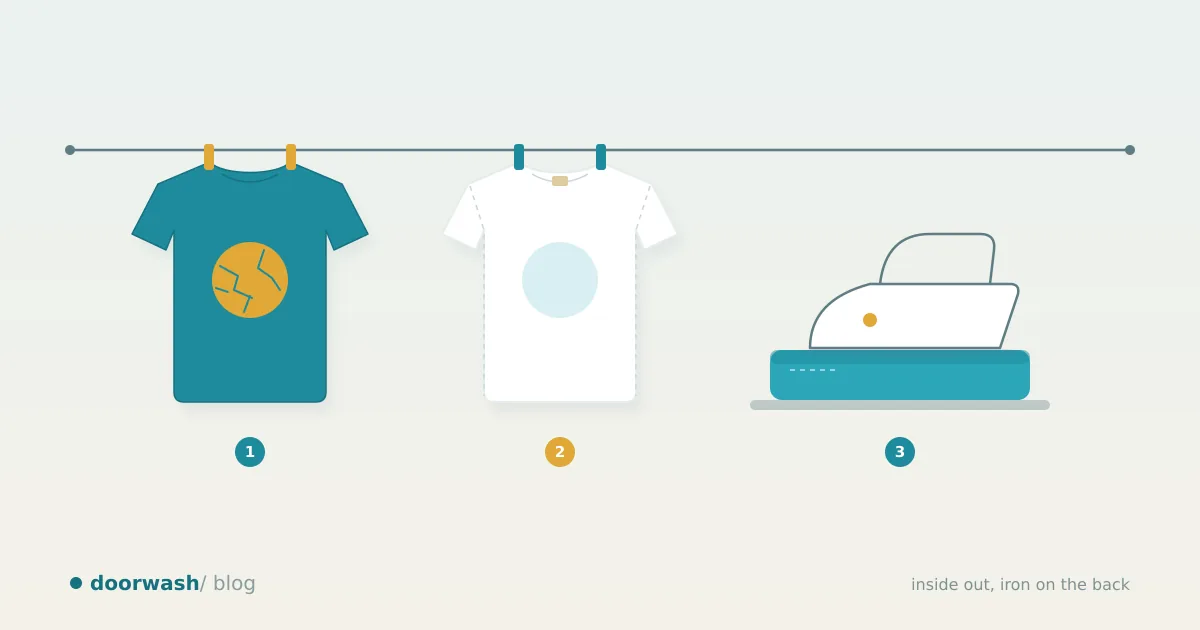
The fix is easy. Turn the tee inside out and iron the back of the fabric. Or put a thin cotton cloth over the print. Or skip the iron entirely. A printed cotton tee hung properly needs almost nothing.
The bucket and the brush
The second killer is the way most of us wash.
A Patna bathroom wash means a bucket of surf, a soak, and then scrubbing with a plastic brush or rubbing the shirt against itself. That works on a collar. On a print, it's sandpaper. Every scrub flexes the plastic and scrapes its surface.
Strong detergent makes it worse. A heavy scoop of powder in hot water slowly dries out the plastic, the same way harsh soap dries your hands. That's why prints go chalky before they crack.
Do this instead:
- Turn the tee inside out before it touches water.
- Use cold or normal tap water. Never hot.
- Use less detergent than you think you need.
- Don't scrub the print. Ever. If the front is dirty, swish it and squeeze it.
In a machine, use a gentle cycle and keep it away from jeans with metal buttons. A zip or rivet going round and round against a print will tear it.
The sun on the roof
The terrace in Kankarbagh is a great place to dry a bedsheet. It is a terrible place to dry a printed tee face up.
Direct afternoon sun heats the print well past what the cotton under it feels. Then the evening cools it down. Expand, shrink, expand, shrink. A few months of that and the cracks show up even if you never ironed.
Dry it inside out, in the shade if you can. On a balcony, behind the other clothes, is perfect.
Stretching it on and off
This one surprises people.
When you pull a tight T-shirt over your head, the chest stretches. The print stretches with it, or tries to. Grabbing a tee by the neck and yanking it off after a sweaty day at Gandhi Maidan is the worst version.
Take it off slowly, by the hem, crossing your arms. You'll feel silly the first time. Your print will last another two years.
Also, don't wring a printed tee into a rope. Press the water out with your palms or roll it inside a towel.
When it has already cracked
Some damage can be slowed. None of it can be undone.
If a vinyl letter is lifting at the edge, a careful press at low heat with a cotton cloth on top can sometimes stick it back down. Test the heat on the inside first. If plastisol has already cracked, it's done. Stop ironing it, stop scrubbing it, and it will at least stop getting worse.
That's honestly fine. A cracked fest tee from 2019 tells a better story than a perfect new one.
What we do with your tees
At DoorWash, printed T-shirts get sorted out of the pile before anything else happens. They're washed inside out, in cool water, with a mild detergent. They dry away from direct heat. When they're pressed, the iron touches only the back of the fabric.
It's a small rule. It's the difference between keeping your batch tee and keeping a faded cotton rag with a few letters on it.
Hand us the shirt you care about. We'll treat it like it matters.
Because it does.