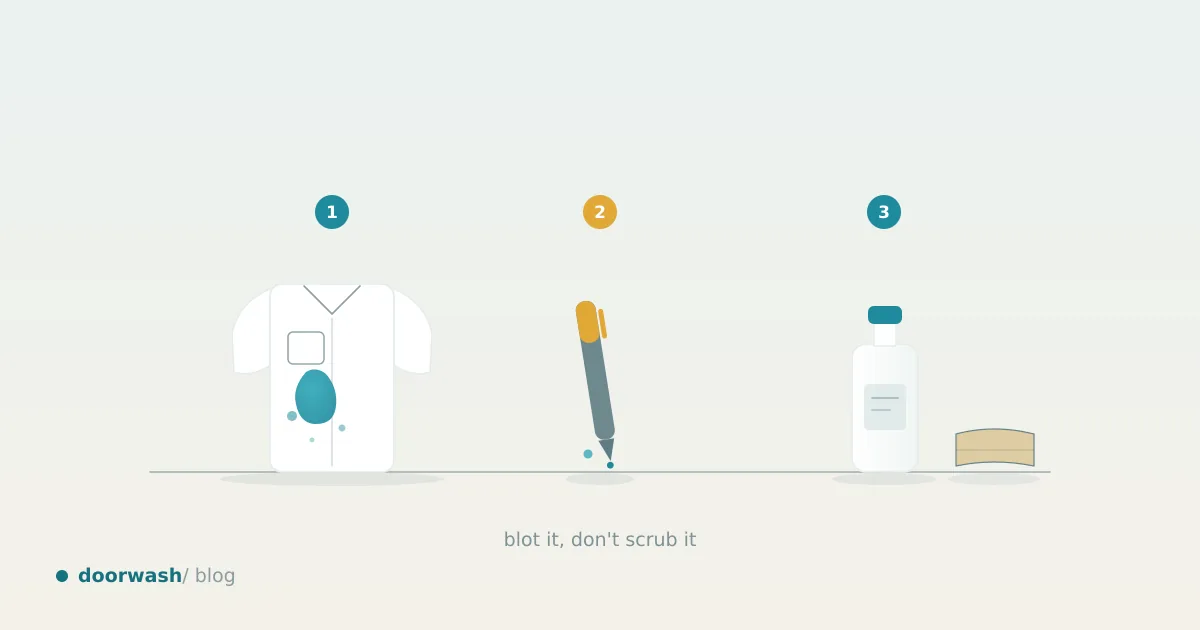
It is twenty to four in the afternoon. You get off the bike near Musallahpur Hat, shirt stuck to your back, and there is a blue cloud under your left pocket. The pen has been sitting in that pocket since nine in the morning. It has been sitting in forty degrees.
Your first instinct is wrong. Almost everybody wets the spot, rubs soap into it, and scrubs with a thumb. That single move turns a coin-sized blot into something the size of your palm.
Why the pen picked today
A ballpoint does not hold liquid ink. It holds a thick paste. In December that paste barely moves. In a Patna August it thins out like ghee on a warm plate, and the air trapped above it inside the barrel expands and pushes. The paste goes past the ball and out.
Now put that pen in a shirt pocket pressed against your chest all morning, or leave the bag on a scooter parked in the open outside a coaching centre. The pen is hotter than you are. Cheap pens with badly sealed tips go first. That is why this happens to you in May and August and never in January.
Ink is dye, not dirt
Mud sits on top of the fibre. Ink goes into it. It is a dye in solvent, and cotton takes dye the way it was built to.
There are two kinds in your pocket, and they need opposite things.
Ballpoint paste is oily. The dye rides in glycol and fatty acid. Water cannot dissolve it, so water only pushes the edges outward and leaves you a bigger, lighter stain with a hard ring.
Gel and fountain ink is water-based. Water does grab it, which helps and also means it travels fast across a dry shirt.
You can tell them apart. Ballpoint sits slightly raised and shiny and smears greasy under a fingernail. Fountain ink soaks in flat and matte, and it usually spreads wider on its own.
The first ten minutes
Take the pen out and check whether the pocket seam is holding a reservoir of it. Then do this before anything else.
Lay the shirt flat on a table with the ink side facing down, on top of a folded old towel or six sheets of newspaper. Everything you do next should push ink downward into that pad, not sideways through the shirt.
Work from the back of the stain. Blot. Never rub. Move to a clean part of the pad every few blots, because a soaked pad just feeds the ink back in.
Do not drop the shirt in a bucket. Do not hold it under a running tap. Not yet.
Alcohol is what lifts ballpoint ink
Hand sanitizer works, because it is sixty to seventy percent alcohol. A bottle of rectified spirit from any medical shop on Ashok Rajpath works better and costs less.
Test it first on the inside of the hem. Dark shirts and anything with a printed panel can give up their own colour to alcohol, and that damage does not come back.
Then dab alcohol onto the stain from the front, wait half a minute, and blot from the back onto the pad. Dab, wait, blot. You will watch blue come off onto the cloth. Do it fifteen times if you have to. The stain gets lighter in steps, never in one go. When no more colour transfers, work a drop of liquid detergent in with a fingertip, leave it ten minutes, and rinse in cold water.
Water-based ink wants cold water first
For fountain and gel ink, hold the back of the stain under a cold tap and let water run through the cloth from behind. You are pushing the ink back out the way it came in. Give it ten minutes.
Cold. Not warm, not hot. Warm water sets the dye into cotton and you will be looking at that shirt for years.
Then a drop of liquid detergent, a fingertip, fifteen minutes, rinse. Only if a shadow survives that do you go to alcohol.
What makes it permanent
Milk. Your neighbour will tell you to soak it in milk. It does nothing to the dye and leaves protein in the fibre, which in this humidity smells by the next evening.
Heat. Hot water, the iron, and the terrace line at two in the afternoon. Never dry a shirt while ink is still in it. Once the sun and a hot iron have had it, the ink stops being a stain and becomes part of the shirt.
The brush. It frays the surface, spreads the ring, and leaves a fuzzy halo you can see from across a room.
Bleach on a coloured shirt. You will trade a blue mark for a pale orange one.
If it already went through a wash
It is harder, not finished. Soak the area in a fifty-fifty mix of glycerine and water for an hour to soften the dried dye, then start the alcohol and blotting cycle from the beginning. Expect two or three rounds across two days. A faint grey ghost sometimes stays on white cotton, and on a formal shirt that ghost is the difference between office wear and house wear.
Carry the pen in your bag, tip up, from March to October. It costs you nothing and it saves the shirt.
If the shirt matters, do not experiment on it twice. Tell us two things when you hand it over, whether it was a ballpoint or a fountain pen and how many hours the ink has been sitting. That one sentence decides the entire treatment. We pick up from your door.