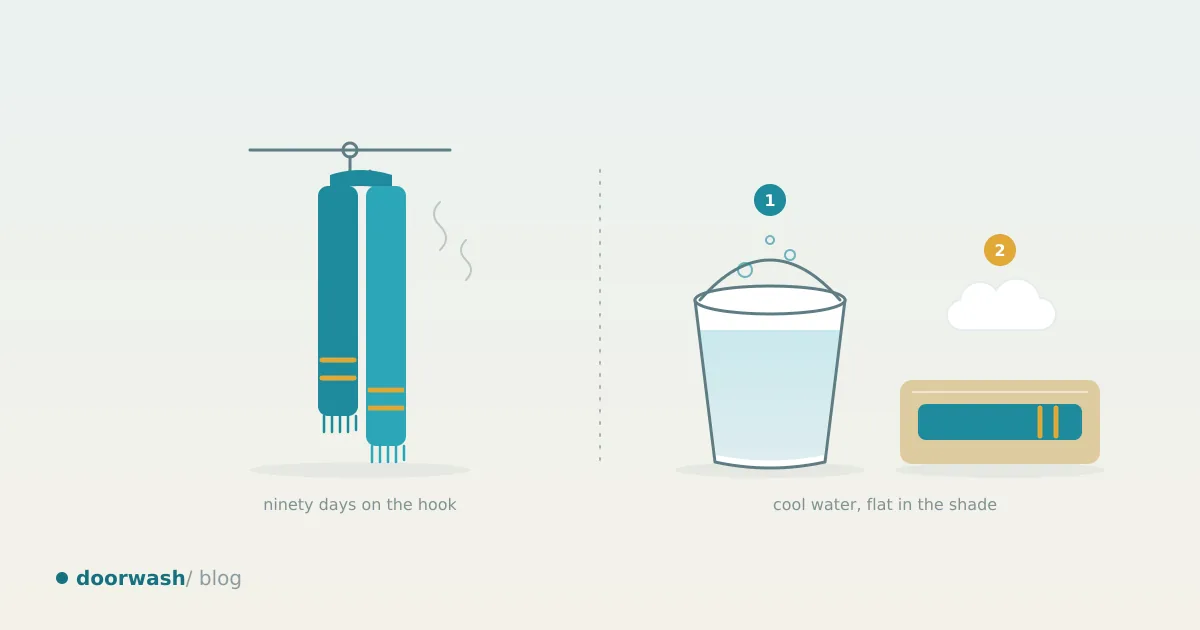
In about six weeks you will open the almirah and pull it out.
The grey muffler. Or the maroon one your mother knitted. Or the checked one you bought off a footpath stall near Hathwa Market for a hundred and fifty rupees. You will wrap it twice around your neck, tuck the ends into your jacket, and start the scooter.
You will wear it every morning until February.
You will not wash it once.
What it actually touches
Think about where a muffler sits.
It sits under your chin. It rubs against the back of your neck, where the hair oil runs down. It covers your mouth on the cold ride over the Gandhi Setu, so it catches every breath, and in a Patna January that breath turns into damp wool by the time you reach the other side.
It soaks up the smoke from the bonfire someone lit outside the paan shop. The dust off Bailey Road. The exhaust from the auto in front of you at the Income Tax signal. Your cough in the second week of December.
A shirt does one day of this and goes to the bucket. A muffler does ninety days and goes back on the hook.
Why nobody washes it
Two reasons. Both are wrong.
The first is that it doesn't look dirty. Wool hides things. Dark wool hides everything. There is no collar line, no sweat patch, no stain you can point at. So it feels clean.
The second is fear. Everyone in Patna has a story about the sweater that went into hot water and came out child sized. So the muffler gets treated like something you cannot touch. You air it on the balcony for an hour. You spray a little perfume on it before a wedding. You fold it and put it back.
None of that cleans it. Airing moves the smell around. Perfume sits on top of the smell. The oil and the skin and the dust are still in the fibres.
Smell it now
Do this once. Take last year's muffler out, right now, and hold the part that sat against your mouth up to your nose.
That sour, slightly stale smell is not the almirah. It is ten months of last winter, sealed in a fold.
Wool is good at holding on to things. That is why it is warm. The same crimp in each fibre that traps air also traps oil. Sebum from your skin goes rancid slowly. Moisture from your breath feeds whatever was already living there. Put that against your nose and mouth for three months and your skin notices. The small red bumps along your jawline in January are often not the cold.
How to wash it without ruining it
Wool is not fragile. It just has two enemies: heat and friction. Avoid both and a muffler will last you fifteen winters.
Use cool water
Room temperature from the tap is right. Not the geyser. Not water you warmed on the gas. Heat plus movement is what makes wool fibres lock together and shrink. Cool water cannot do that.
Use the right soap
Regular washing powder is alkaline and harsh on wool. Use a wool wash if you have one. If you don't, a spoon of mild shampoo works. Wool is hair. Treat it like hair.
Soak, don't scrub
Fill a bucket, stir the soap in, push the muffler under and leave it for fifteen minutes. Then press it gently with flat hands a few times. Do not rub it against itself. Do not beat it on the bathroom floor. Do not use a brush. Rubbing is friction, and friction makes felt.
Rinse the same way. Fresh cool water, press, lift, repeat until the water runs clear.
Never wring it
Twisting wet wool stretches it out of shape for good. Instead, roll it up inside a dry towel and press down on the roll. The towel pulls out most of the water.
Dry it flat, in the shade
Lay it on a dry towel on the bed or a flat surface. Shape it back to its length. Turn it once. Do not hang it on the line, where the weight of the water pulls it long and thin. Do not put it in hard afternoon sun on the terrace. Sun fades the colour and makes the fibres brittle.
In Patna's October air it will be dry in a day. In January it can take two. Make sure it is fully dry before you fold it, or you will be back where you started.
How often
Once before the season starts. Once in the middle, around Makar Sankranti. Once at the end, before it goes back into the almirah. That last one matters most. A muffler put away dirty in February spends the whole monsoon feeding on what you left in it.
If you have a cold, wash it when the cold is over. Then wear it again.
Or hand it over
Some mufflers deserve more care than a bucket. Pashmina. Anything hand knitted. Anything with fringe that tangles. If you don't have the time on a Sunday, or you don't trust yourself with it, DoorWash will pick it up from your door, wash it the way wool needs to be washed, and bring it back dry and folded.
Either way, wash it before you wear it this year.
It is the closest thing to your face for three months. It should smell like nothing at all.