The litti thela is back.
You see it the first evening the air turns cool. Coal glowing in a tin drum, a pile of sattu-stuffed balls, a steel bowl of ghee with a ladle in it. Boring Road, Fraser Road, the corner near Kankarbagh's Tempo stand. Every neighbourhood has one.
You eat standing. Leaf plate in one hand, litti in the other, chokha on the side. The man dips each litti in ghee before he hands it over, because that is how litti is supposed to be.
One drop falls on your shirt.
You press it with the thin paper napkin. It looks like a water mark. You forget about it. Next morning it is still there, a little darker. After Sunday's wash it is a faint shadow. By Holi it is a yellow patch right at chest height, exactly where food lands.
That patch started at the litti stall in October.
Why ghee looks like water
A drop of oil fills the tiny gaps between the threads of your shirt. Normally those gaps scatter light, which is why cloth looks solid. Fill them with oil and light goes straight through. The spot looks darker and a little see-through, just like a wet patch.
Water dries in ten minutes. Ghee never does.
It sits there. Over weeks, the air slowly oxidises it, the way ghee in an open jar goes stale. That is where the yellow comes from. It also collects dust from every ride home, so the spot gets grey before it gets yellow.
Why your bucket wash misses it
Ghee goes solid when it cools. On a November morning in Patna, the water in your bucket is cold, and the ghee inside the weave sets like it does in the jar on your kitchen shelf.
Detergent powder dissolves badly in cold water. You scrub harder. The scrubbing pushes the oil deeper into the thread instead of pulling it out.
Then it goes up on the roof, into the afternoon sun. Or worse, to the press wala. Heat drives the oil further into the fibre and starts cooking it. An oil spot that has been ironed twice is very hard to remove.
Polyester makes all of this worse. It holds oil more tightly than cotton does, and most office shirts and a lot of festive kurtas are part polyester.
At the stall
Do not rub. Rubbing spreads one small spot into a large faint one.
Press the napkin flat on the drop and lift it. Use a fresh corner and press again. You are only trying to take off what has not soaked in yet. Ten seconds. Then finish your litti.
Do not pour water on it from the stall's matka. Water does nothing to oil. It just leaves a ring around the stain.
At home, the same evening
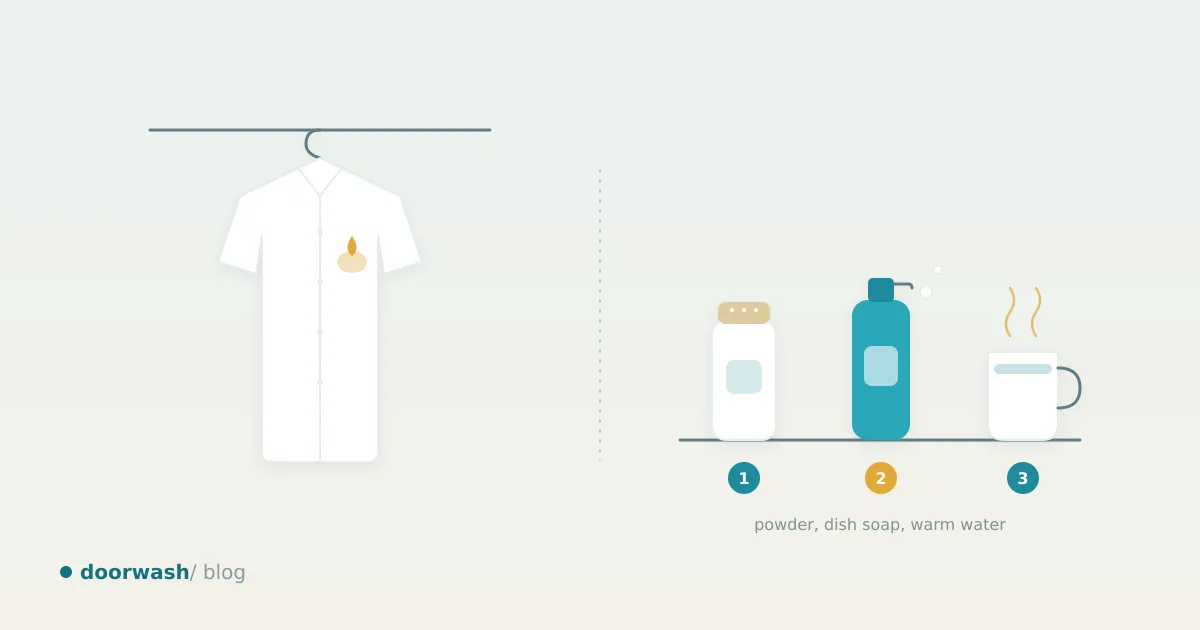
You need three things that are already in your kitchen.
1. Powder
Talcum powder, cornflour, or besan. Lay the shirt flat and put a thick heap of powder right on the spot. Press it down lightly with a finger.
Leave it for at least twenty minutes. An hour is better. The powder pulls the oil out of the cloth and into itself.
Brush it off with an old toothbrush. The spot will already look lighter. If the stain was large, do it once more.
2. Dish soap
The liquid you use on your kadhai. It is made to cut ghee off steel, and it does the same thing to cloth.
Put a few drops directly on the spot. Work it in gently with your fingers from both sides of the cloth. Leave it for ten minutes.
3. Warm water
Oil needs warmth. Blood needs cold water, oil needs warm. Use water as warm as the care label allows. For most cotton shirts, that is warm enough that you can keep your hand in it comfortably.
Rinse from the back of the fabric. The oil came in through the front, so you want to push it back out the front, not through the whole shirt.
Then wash the shirt as usual.
Check before it dries
A wet shirt hides oil. You cannot judge the spot while it is damp.
Dry it in the shade, not the sun. When it is fully dry, hold it up to a window. If you still see a shadow, repeat the powder and dish soap. Do not iron it until the shadow is gone. Once you iron it, the stain is permanent.
The yellow patch from last winter
You can still try. Put powder on it overnight. Then dish soap, then soak it for an hour in warm water with your regular detergent, and scrub lightly with the toothbrush.
On cotton, most of it will lift. On a polyester shirt that has been ironed several times, it may only fade. Some stains have been there too long, and some shirts have already lost.
Silk and wool
The pashmina shawl you wore to the stall on a cold night is a different case. No dish soap, no scrubbing, no warm water. Put powder on the spot, leave it, brush it off gently, and send it for dry cleaning. Dry cleaning uses a solvent that dissolves oil without water, and that is exactly what wool and silk need.
One small habit
Lean forward when you eat. Hold the leaf plate under your chin, not at your waist. It sounds too simple. It saves more shirts than anything above.
If you would rather not stand over a sink with a toothbrush at ten at night, put the shirt in your DoorWash bag and tell us where the spot is when you hand it over. We treat it before the wash, not after.
Eat the litti. Ask for extra ghee. The shirt will be fine if you treat it the same night.