You leave the house with it over your left shoulder. The thin red-and-white gamcha, checked, soft from years of use. It goes everywhere you go. It is the most useful piece of cloth in your life. It is also the dirtiest, and you have stopped seeing it.
Walk it through one Patna day.
One day, one gamcha
You wait for the auto near the Bailey Road crossing. Nine in the morning and the sun is already hard. You pull the gamcha off your shoulder and wipe your face. Then your neck. Then the sweat running behind your ears.
At the chai stall you hold the glass, drink, and dry your hand on it. You wipe the scooter seat before your kid sits down. You spread it flat on a hot bench so you can sit. At noon you fold it over your head to cut the sun. You dab your kid's face with the same corner you used at nine.
By two in the afternoon it is soaked through with salt. You hang it back on your shoulder. The shoulder heat dries it stiff. Then it soaks again.
Count how many times that cloth touched your face today. Now count how many times your shirt did.
It knows your face better than your shirt
Your shirt takes your back and your chest. The gamcha takes your eyes, your forehead, your lips, your nose. It goes to the softest, most exposed skin you have, and it goes there fifty times a day.
Sweat is food. Warmth is the kitchen. Patna gives you both from March to October. A cloth that stays damp and warm and full of sweat grows bacteria fast. You are not washing it between wipes. You are pressing the same bacteria back into your eyes and your forehead, again and again.
This is where the small mysteries come from. The stye that keeps returning. The itch on the eyelid. The rough patch of breakouts on the forehead that no facewash fixes. You blame the dust and the water. Sometimes the answer is the cloth you trust the most.
The monsoon makes it worse
In July the gamcha never gets a real chance to dry. You hang it on the balcony line and the air is already wet. It stays damp overnight. By morning it has that sour, closed smell.
That smell is mildew. It means the cloth stayed wet long enough for mould to move in. You put it back on your shoulder anyway, because it is the only one you have, and you carry that smell to your face all day.
A rinse is not a wash
Here is the part most people get wrong. At night you dunk the gamcha in the same bucket you used for your feet, wring it, and hang it. You think it is clean because it is wet.
It is not. A cold dunk lifts loose dust. It does not touch the salt packed into the weave, and it does not kill what is growing there. Salt is why an old gamcha feels stiff and scratchy even after you rinse it. The sweat is still inside the threads.
A real wash needs warm water, real detergent, a proper soak, and a full dry in moving air or strong sun. The sun does more than dry it. The heat and the light finish off the bacteria that the water missed. A gamcha that dries hard and hot on a bright roof is safe. One that dries limp on an inside line in the rains is not.
What to actually do
Stop running one gamcha for a week. In this heat it is finished after two days of real wear.
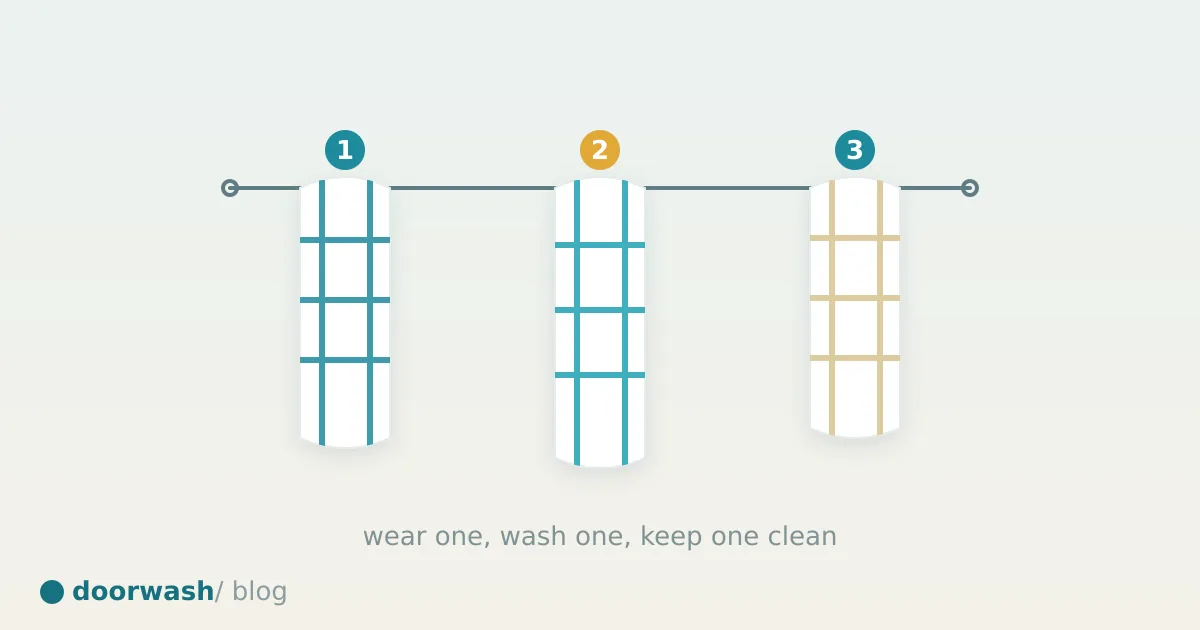
Keep three or four in rotation. Wear one for two days, wash it properly, dry it fully, put it at the bottom of the pile. Rotate. It is the same logic you already use for shirts, and the gamcha earns it more than the shirt does.
Wash it hot. Cotton takes heat well. Warm water and a good detergent will pull the salt and the sweat out in a way a cold bucket never will. Dry it in the sun when the sun shows up. In the rains, dry it under a fan in a room that moves air, not in a still corner.
And do not use the one you wipe your face with to wipe the scooter seat. Keep an old, ugly one for the seat and the dust. Keep a clean one for you.
You carry this cloth against your eyes all day. It deserves a real wash, not a dunk.
When the day is already too full for that, hand it to us. We pick it up from your door, wash it hot and proper, dry it fully, and bring it back soft. Keep a few in the rotation and you will never again press a sour, salt-stiff gamcha to your face at a Patna crossing.