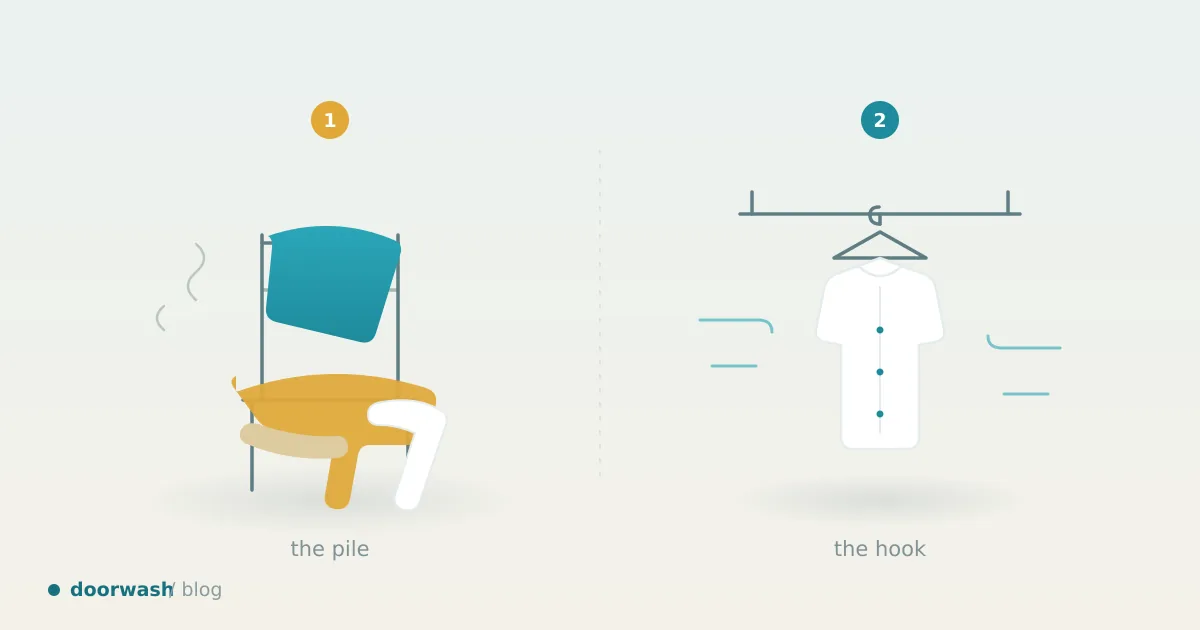
There is a chair in your room. You know the one.
Maybe it isn't a chair. Maybe it's the hook behind the door, or the corner of the bed, or the back of the almirah door. It has clothes on it. Not clean ones. Not dirty ones either. The in-between clothes. The jeans you wore twice. The kurta that still looks fine. Tuesday's shirt you plan to wear again on Friday.
Every house in Patna has this pile. Nobody thinks about it.
In August, it is the worst place in your room.
What comes off your body at seven in the evening
A shirt you wore all day is not empty. It holds sweat, the oil off your skin, dead skin, and the dust that came in off the road. Sweat by itself has almost no smell. The smell gets made later, by bacteria that live on you and ride into the cloth, feeding on the fats in that sweat and giving off the sour compounds you eventually notice.
Those bacteria need four things. Warmth. Moisture. Food. Time.
Your chair gives them all four, generously.
The pile is worse than the basket
Fold a damp shirt onto a heap and you seal it. Air cannot reach the inside. Patna air in August sits near ninety percent humidity most of the day, and the room doesn't drop below thirty degrees at night. Inside a folded, still-damp shirt, it stays wet for hours. That isn't storage. It's a warm cabinet with food in it.
Now look at the bottom of your pile. There's something down there you forgot about. It has been pressed flat under six other things for nine days and hasn't touched moving air once. That is where the faint grey speckling on a white kurta starts. Mildew doesn't need a leak. It needs damp and stillness, and the bottom of a pile in August is both.
Why the shirt smells by ten in the morning
Here is the part that confuses people.
You pick that shirt off the chair on Friday. You sniff it. It's fine. You wear it. By ten it is not fine, and you decide the heat did it in two hours.
It didn't. The smell was already in the cloth. It had dried down and gone quiet. The moment your body warmed the fabric and put fresh moisture back into it, those compounds lifted off again. You were smelling Tuesday.
That's the tell. A shirt that turns within an hour of wearing was never clean. It was only dry.
What to do instead
Hang it, don't heap it. One hook, one garment, air on both sides. A shirt with space around it dries in a fraction of the time a folded one takes.
Twenty minutes under the fan, inside out. The underarms and the collar are the wet parts. Turn them outward so the air actually reaches them. This costs nothing, and it's the whole difference between a shirt you can wear again and a shirt you can't.
Wet goes straight to the wash. If the underarms are still damp when you take it off, it is not an in-between garment. Don't put it on the chair and hope. That one decision is what builds the pile in the first place.
Keep worn clothes out of the almirah. A closed almirah in August is stiller and damper than your room. Anything worn that goes in there shares its smell with everything clean around it, and then five shirts have the problem instead of one.
Skip the two o'clock terrace refresh. Hanging a worn shirt in direct August sun to freshen it is a bad trade. That sun fades the dye and cooks the elastic. Shade and moving air do the work. Sun only does the damage.
The honest count
Go and look at the chair right now. Count what's on it.
Two things is a system. Six things is a delay. Those aren't in-between clothes, they're dirty clothes you haven't admitted to yet, and every extra day in the heap makes them harder to clean. Dried sweat and skin oil bond into cotton over time. After a week, one ordinary bucket wash stops lifting them, and you get a shirt that comes out looking clean and smells sour the moment you sweat in it.
So clear the chair. Wash what's honestly dirty. Hang the two things that genuinely aren't, with air around them.
If the pile exists because washing day never arrives, that's a scheduling problem, not a discipline problem. DoorWash picks up from your door in Patna and brings it all back washed, properly dried and folded. Your chair goes back to being a chair.