You wake up and there is a small red mark on the bedsheet. Maybe it was a mosquito you slapped at 3 a.m. Maybe it was your period. Maybe a shaving nick bled into your collar while you were rushing to catch the auto on Bailey Road.
You do the sensible thing. You run the hot tap and scrub.
That is the one thing that makes it permanent.
Blood is protein, and protein cooks
Think of an egg. Raw egg white is clear and runny. Put it in a hot pan and it turns solid and white in seconds. It never goes back.
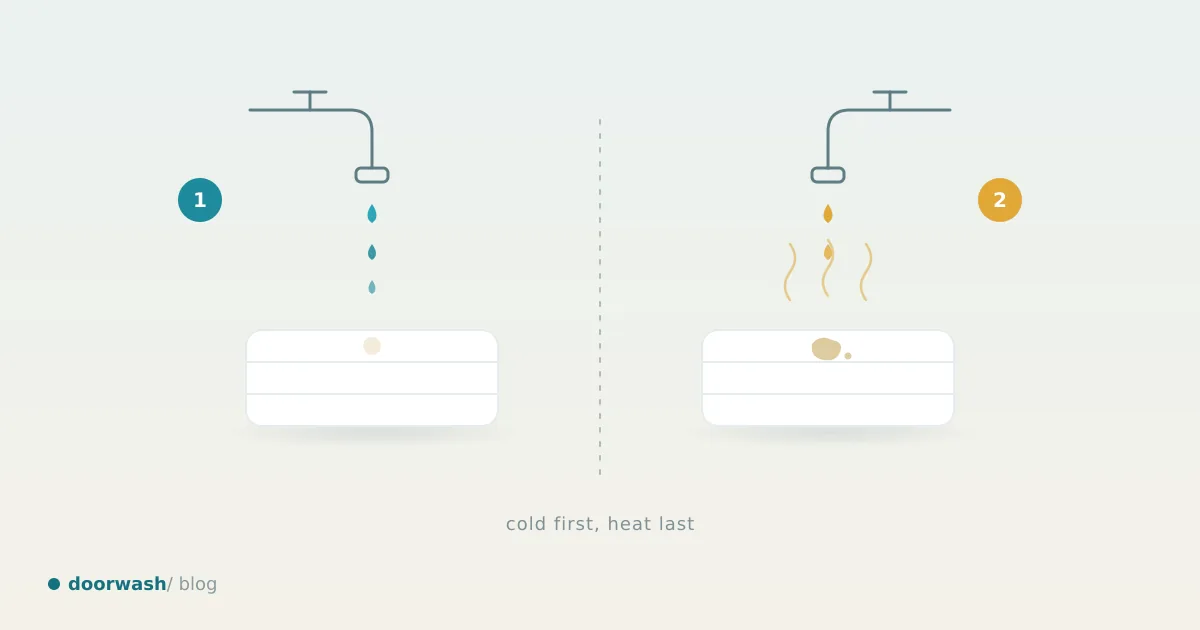
Blood works the same way. Most of what makes the stain is protein. In cold water, that protein stays loose and washes out. Above roughly 40 degrees, it starts to set. It grips the cotton fibres and locks the iron-red colour in with it. After that you are no longer washing a stain. You are trying to scrape a cooked egg out of a towel.
So the rule is simple. Cold water first. Always. Heat comes last, and only when the mark is completely gone.
Patna makes this mistake for you
Here is the problem. In this city, your tap water is not always cold, even when you turn the cold tap.
In May and June, the plastic tank on your roof sits in 44 degree sun all day. By afternoon, the "cold" water coming out of your bathroom tap is hot enough to make you pull your hand back. That is hot enough to set blood.
In December, it is the geyser. Everyone in a Kankarbagh flat or a Boring Road PG runs it in the morning, and the first bucket of the day goes on whatever is soaking.
And then there is the terrace. You wash the sheet, the stain looks faint, you hang it in the afternoon sun. The sun finishes the job the hot water started. By evening the faint brown mark is part of the sheet forever.
So use water from a bucket that has been standing overnight, or from the ground floor tap that comes straight from the boring. Feel it with your wrist before the cloth goes in. If it feels warm, it is too warm.
The order that works on a fresh stain
Fresh means the blood is still wet or went on within the last hour or two. This is the easy case. Do not waste it.
- Rinse from the back. Turn the cloth inside out and hold the stain under cold running water. You want the water to push the blood back out the way it came in, not drive it through the weave.
- Rub it against itself. Pinch the cloth on both sides of the mark and rub it together gently. No brush. A brush spreads it and roughs up the fibres.
- Use plain bath soap or a little detergent. Work it in with your fingers, cold water only, and rinse again.
- Check it wet, in good light. Hold it up to the window. If you can still see a shadow, repeat. Do not move on until it is gone.
For a small spot of your own blood, there is an old trick that works. A little of your own saliva on a cotton bud. The enzymes in it start breaking the protein down. It sounds strange. It works on a pinprick.
The order for a stain that has already dried
You found it in the morning. It is brown, not red. It is harder, but not lost, as long as nobody has put it in hot water or the sun yet.
Soak it in a mug or a small bowl of cold water with a spoon of salt for thirty minutes. Salt helps loosen dried blood. Then rub it gently and rinse.
If it is still there, look at your detergent pack. Many of the regular brands in any Patna kirana shop list enzymes on the back. Those enzymes are built to eat protein. Make a paste with a little powder and cold water, leave it on the stain for twenty minutes, then wash.
For white cotton only, there is one more step. Hydrogen peroxide, the 3 percent bottle from any chemist on Ashok Rajpath for about twenty or thirty rupees. Dab a little on the mark. It will fizz. That fizz is it working. Rinse well after. Do not use it on coloured clothes without testing a hidden seam first, because it bleaches dye as easily as it bleaches blood.
Do not use chlorine bleach on blood. It reacts with the protein and can turn the mark a darker yellow that never leaves.
Where to be careful
Silk and wool are made of protein too. The enzymes that eat blood will eat your Bhagalpuri silk dupatta or your pashmina shawl along with it. Peroxide will strip their colour. On these, use only cold water and a gentle dab with a clean cloth. Then send it to someone who cleans silk for a living.
A mattress cannot be soaked. Dab the spot with a cloth dipped in cold salt water, press with a dry towel, and repeat. Then let it dry with the fan on, not in the sun.
The last rule
Never iron a stained cloth. Never dry it on the terrace. Never put it in the machine on a warm cycle. Check every time before heat touches it.
Most blood stains that last for years were not difficult stains. They were easy stains that got hot water too early.
If you would rather not stand at the tap at seven in the morning before office, put the sheet in a bag and leave it for DoorWash. Tell us there is a blood stain on it. We treat it cold, before anything else touches it.